This article has been reviewed according to Science X's editorial process and policies. Editors have highlighted the following attributes while ensuring the content's credibility:
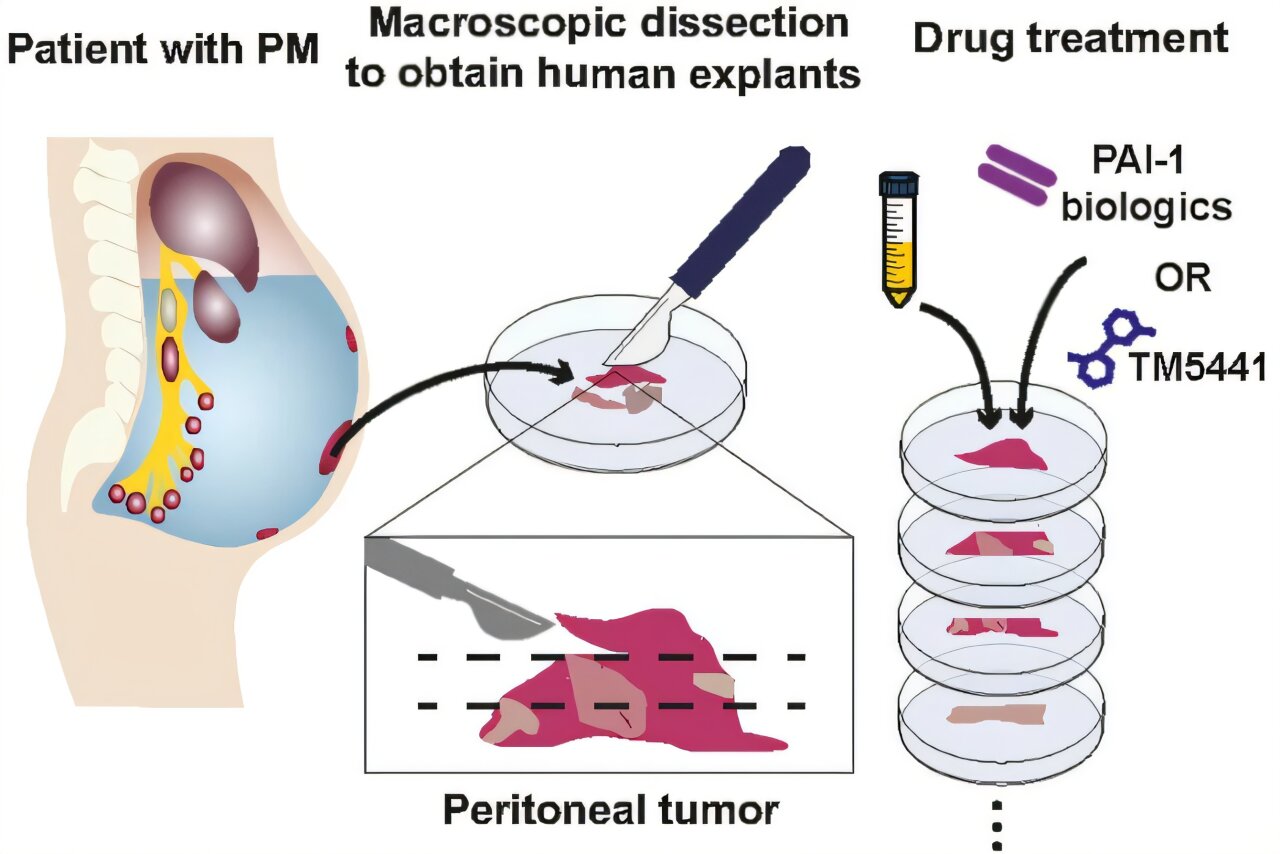
Peritoneal metastases, a form of late-stage cancer that has spread to the lining of the abdominal cavity, carry a median survival of under nine months and currently have few effective treatments. A buildup of fluid in the abdomen known as ascites is known to actively fuel tumor growth, but the molecular contents of this fluid and the mechanisms by which it drives cancer growth have remained poorly understood.
Now, a team of clinicians and scientists led by the National Cancer Center Singapore (NCCS), in collaboration with A*STAR Institute of Molecular and Cell Biology (A*STAR IMCB), Singapore General Hospital (SGH) and the Yong Loo Lin School of Medicine, National University of Singapore (NUS Medicine), has conducted a large-scale analysis of ascites to map its protein landscape and uncover the biological pathways driving tumor development.
Analyzing what is believed to be one of the world's largest ascites datasets, the team identified two proteins, PAI-1 and S100A10, as key drivers of tumor growth in the ascites microenvironment. Building on this discovery, the team then developed a novel nanobody called E8 that targets PAI-1 and demonstrated that it can suppress tumor growth in laboratory, mouse and human tissue models with minimal toxicity.
Associate Professor Johnny Ong, the study's senior author and head of the Department of Sarcoma, Peritoneal and Rare Tumors (SPRinT), Division of Surgery and Surgical Oncology at SGH and NCCS, said, "With our team's discovery of these proteins that are the key drivers of cancer growth and our subsequent development of E8, we now have the possibility of offering a new class of treatments for peritoneal metastases that targets the tumor microenvironment via ascites, rather than the tumor cells directly.
Source link