This article has been reviewed according to Science X's editorial process and policies. Editors have highlighted the following attributes while ensuring the content's credibility:
New Maynooth University (MU) research led by the Department of Biology's Dr. Ciara Flynn, working within the research group of Professor Andrew Hogan at the Kathleen Lonsdale Institute for Human Health Research, has found that obesity can impair key immune cells that help protect the body against infection and cancer.
The study, published in JCI Insight, also found that bariatric surgery can reverse many of these immune cell defects, restoring their ability to respond more effectively to threats.
More than 1 billion adults worldwide live with obesity, which is linked to a greater risk of severe outcomes from viral and bacterial infections. During the COVID-19 pandemic, for example, people living with obesity faced a significantly higher risk of serious illness.
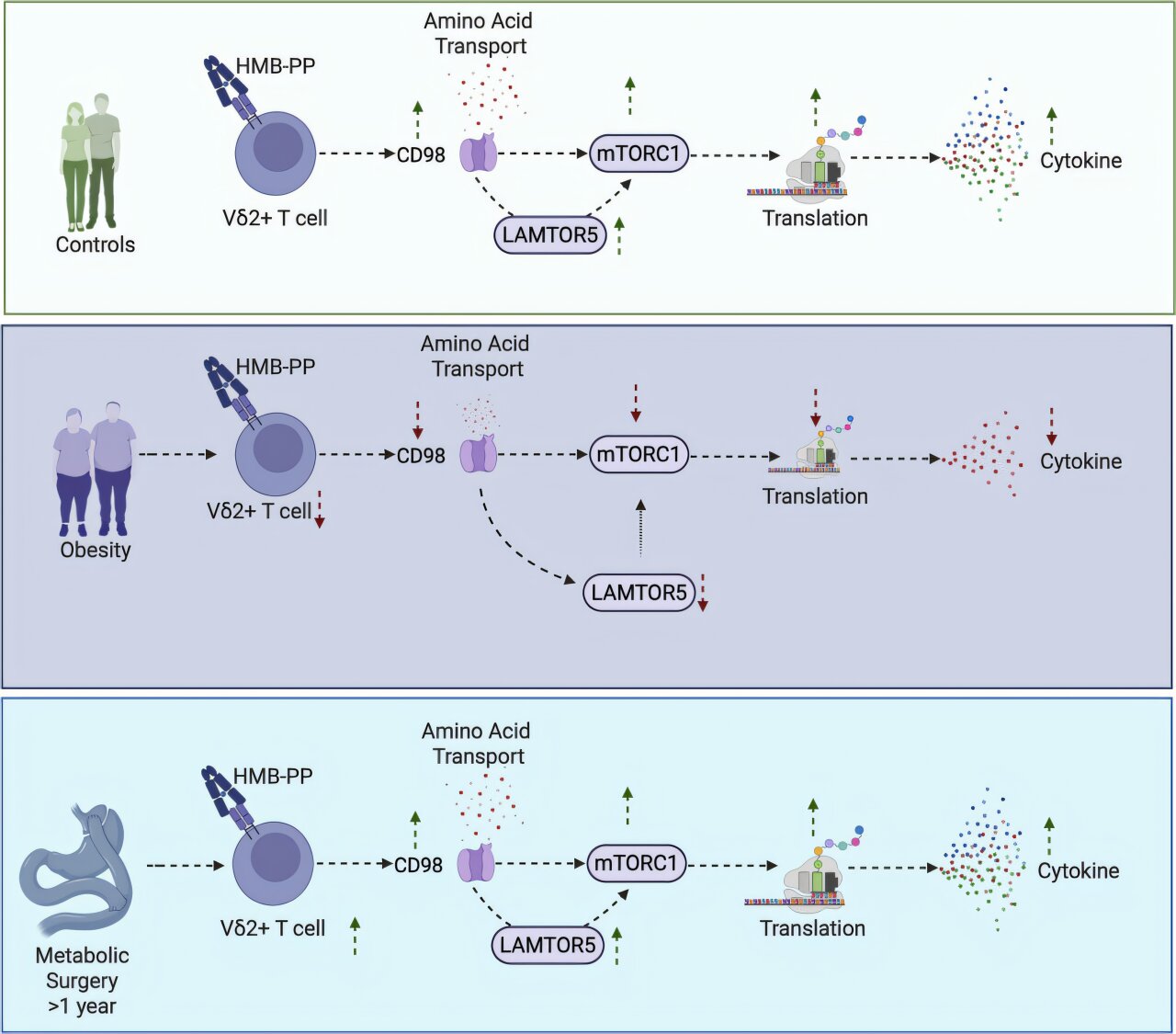
The study helps explain this heightened vulnerability by examining gamma delta (γδ) T cells, a specialized group of immune cells, particularly a subset called Vδ2+ T cells.
These cells are part of the body's first line of defense. They respond rapidly to infection and help identify and destroy certain cancer cells.
Researchers found that people living with obesity had fewer Vδ2+ T cells in their blood and that the cells were less active when stimulated. The cells also showed abnormalities in the processes that control nutrient uptake and energy production, both of which are essential to an effective immune response.
The findings indicate that obesity disrupts the cells' metabolism, limiting the energy available to respond to infection and disease.
Source link