This article has been reviewed according to Science X's editorial process and policies. Editors have highlighted the following attributes while ensuring the content's credibility:
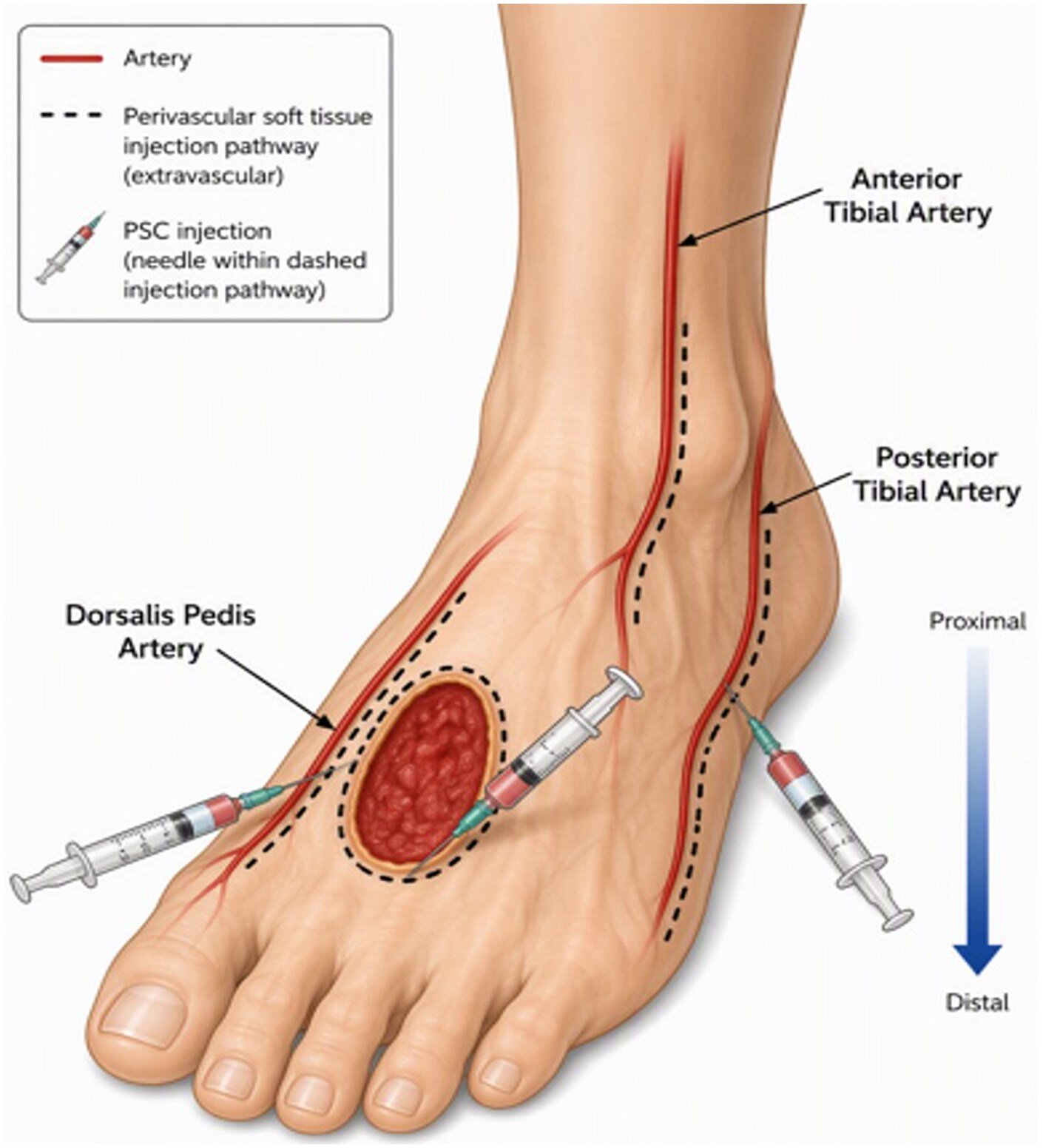
An experimental cell therapy was well tolerated in 10 people with chronic diabetic foot ulcers, according to a first-in-human study led by researchers at Wake Forest Institute for Regenerative Medicine (WFIRM).
All 10 participants experienced complete wound closure within six months, and tests indicated improved sensation in the treated feet during the 12-month follow-up period. These encouraging findings support further investigation. The findings were published in Stem Cells Translational Medicine.
Diabetic foot ulcers are open wounds that can develop when diabetes damages nerves and reduces a person's ability to feel injuries to the foot. These ulcers are the leading cause of lower-limb amputation in the United States. Diabetic peripheral neuropathy, nerve damage associated with diabetes, is generally managed by controlling diabetes and treating symptoms. Options for restoring lost sensation remain limited. The recent findings and further study could provide additional insight into treatment for patients.
The investigational stem cells used to treat study participants were derived from healthy placental tissue donated following childbirth. This tissue is typically discarded after delivery but contains cells with properties that may help control inflammation and support tissue repair.
, an author of the study.
Source link