This article has been reviewed according to Science X's editorial process and policies. Editors have highlighted the following attributes while ensuring the content's credibility:
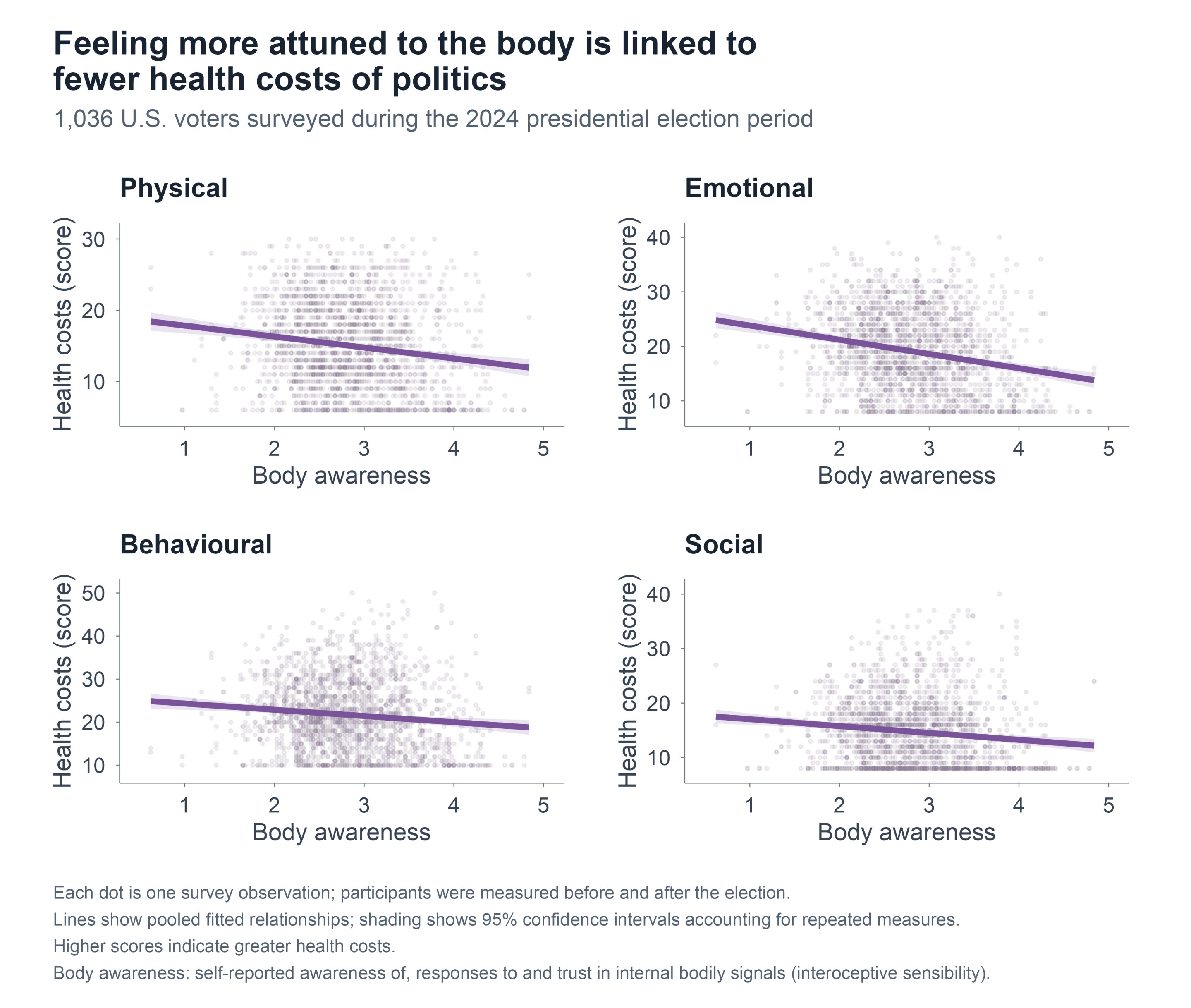
A study of more than 2,000 Americans across two elections found that people who notice and trust their body's signals reported fewer physical, emotional, behavioral and social costs from politics, and were more politically engaged.
The findings come days before the 2026 U.S. midterm elections on Nov. 3: the first national vote since the 2024 presidential election in which the researchers tracked voters.
Politics can make people ill. Surveys led by political scientist Kevin Smith at the University of Nebraska-Lincoln have found that around four in 10 U.S. adults see politics as a significant source of stress. One in five say it has cost them sleep, and three in 10 say they have lost their temper over it. Those most engaged in politics often pay the highest price. That raises a question: Is switching off the only way to protect your health?
A new study by the Centre for the Politics of Feelings at the School of Advanced Study, University of London and Royal Holloway, University of London, accepted for publication in the journal Political Psychology, suggests it may not be. It points to interoception: our sense of what is happening inside our body, such as our heartbeat, breathing, and muscle tension.
S. midterms and the 2024 presidential election, Democrats and Republicans with higher interoceptive sensibility (the tendency to notice, interpret and trust bodily signals) consistently reported lower physical, emotional, behavioral and social costs from politics.
Source link