This article has been reviewed according to Science X's editorial process and policies. Editors have highlighted the following attributes while ensuring the content's credibility:
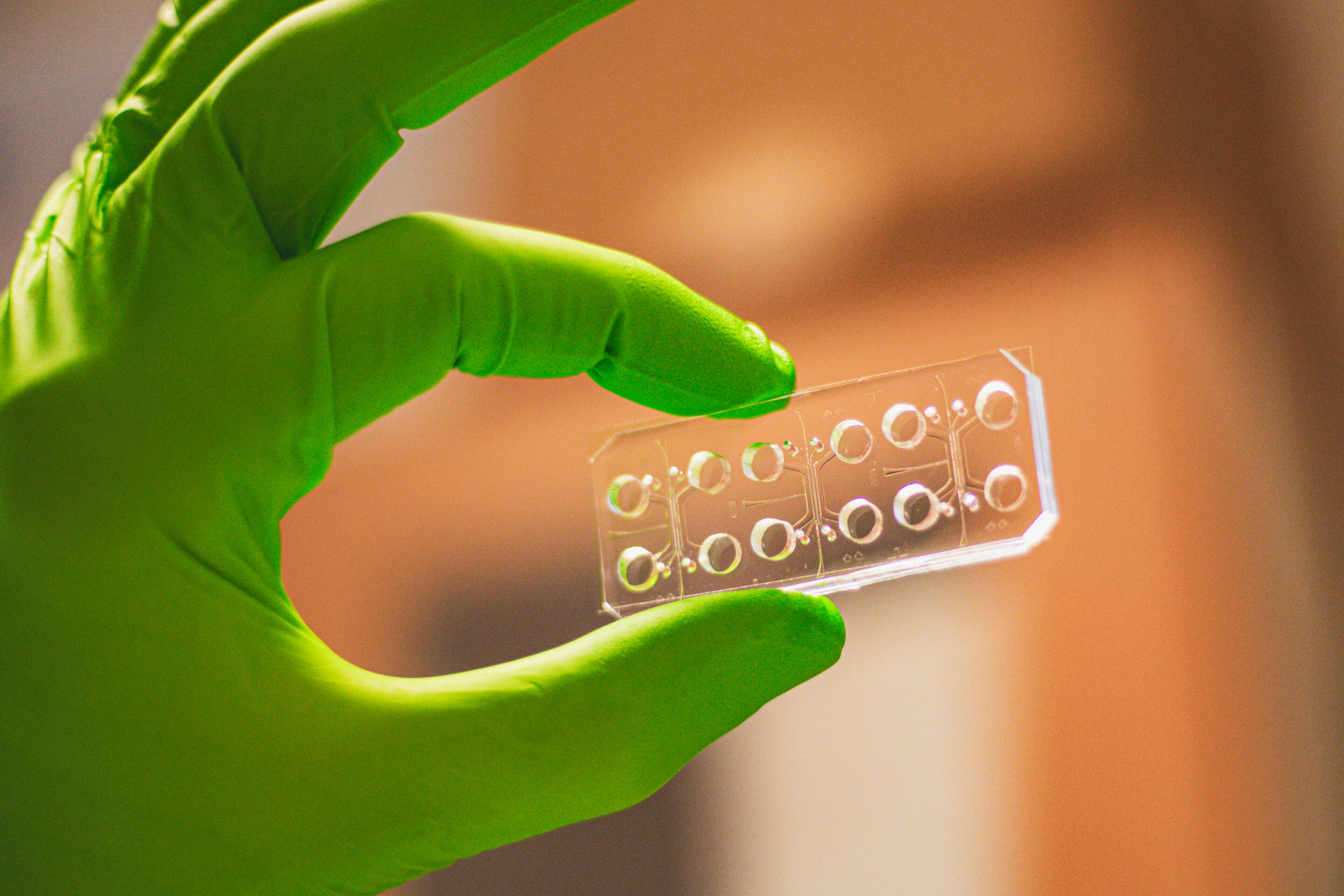
On an organ-on-a-chip, researchers can now explore how tumors grow and interact with their surroundings. The chip, a small plate where cancer cells, nerves and blood vessels grow, was developed by researchers at Linköping University, Sweden, in collaboration with colleagues at Politecnico di Milano in Italy. It is described in an article published in the journal Proceedings of the National Academy of Sciences.
A tumor consists of more than just cancer cells. In the body, solid tumors grow in close interaction with blood vessels, nerves and the surrounding tissue. To replicate basic organ functions outside the body, the technology known as organ-on-chip is used.
Researchers have now developed such a model of head and neck cancer and demonstrated that the concept works. The entire system fits on a plate roughly the size of a postage stamp.
The model enables researchers to study complex interactions under highly controlled conditions.
"Rather than having to carry out research on animals or test potential drugs in humans, we want to be able to carry out tests in a single microsystem in the laboratory. If we want to understand why a tumor grows, spreads, causes pain or resists treatment, we need models that can replicate the interactions between the tumor and its surroundings," says Pierfrancesco Pagella, senior associate professor at Linköping University, who led the study.
To replicate interactions in the body, the researchers developed the model in three steps.
Source link