
This article has been reviewed according to Science X's editorial process and policies. Editors have highlighted the following attributes while ensuring the content's credibility:
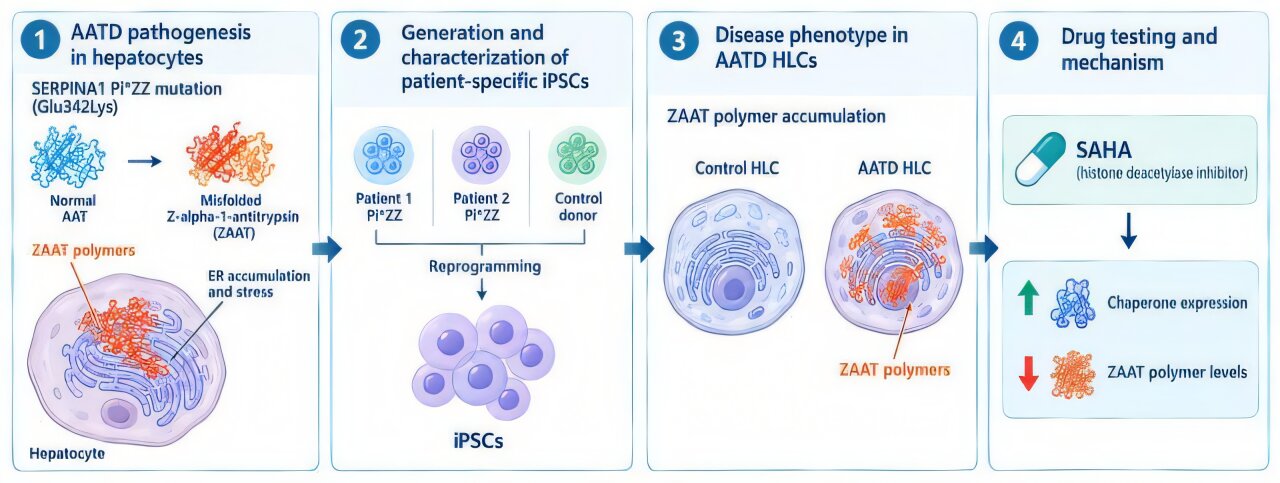
AATD is a rare genetic metabolic disorder that affects the liver and lungs. A mutation causes liver cells (hepatocytes) to form misfolded alpha-1-antitrypsin (AAT). This misfolding results in reduced secretion of AAT into the blood plasma. AAT plays an important role in controlling inflammatory processes in the body by mitigating excessive reactions that lead to tissue damage.
When AAT levels are reduced, enzymes associated with inflammation can attack tissues in patients. This primarily affects the lungs and results in severe symptoms, such as coughing, shortness of breath or constriction of the airways. In some patients, liver function is also impaired as the misfolded AAT proteins can accumulate there and increase the susceptibility of the cells to stress reactions. These patients have a significantly increased risk of developing a liver tumor or cirrhosis. Research is currently being conducted into various potential forms of therapy. However, patients often need a liver transplant.
Research into potential new therapeutic approaches is impeded by the fact that there are very few models for a liver affected by AATD. A team from the Institute of Stem Cell Research and Regenerative Medicine at HHU and University Hospital Düsseldorf has therefore developed a model to make this easier in the future. Their research is published in the journal Stem Cell Research & Therapy.
First, they reprogrammed cells derived from two patients into induced pluripotent stem cells (iPSC).
Source link





