This article has been reviewed according to Science X's editorial process and policies. Editors have highlighted the following attributes while ensuring the content's credibility:
One of the main reasons ovarian cancer is among the deadliest forms of cancer is timing: When doctors catch it early, the five-year survival rate can be more than 90%. But when doctors catch it late, in stages 3 or 4, five-year survival is less than half that.
About 20 years ago, researchers studying ovarian cancer discovered that many cases of high-grade serous ovarian cancer, the most common type, originate in the fallopian tubes. Detecting the disease there remains challenging, in part because its precursor lesions can be microscopic and difficult to sample.
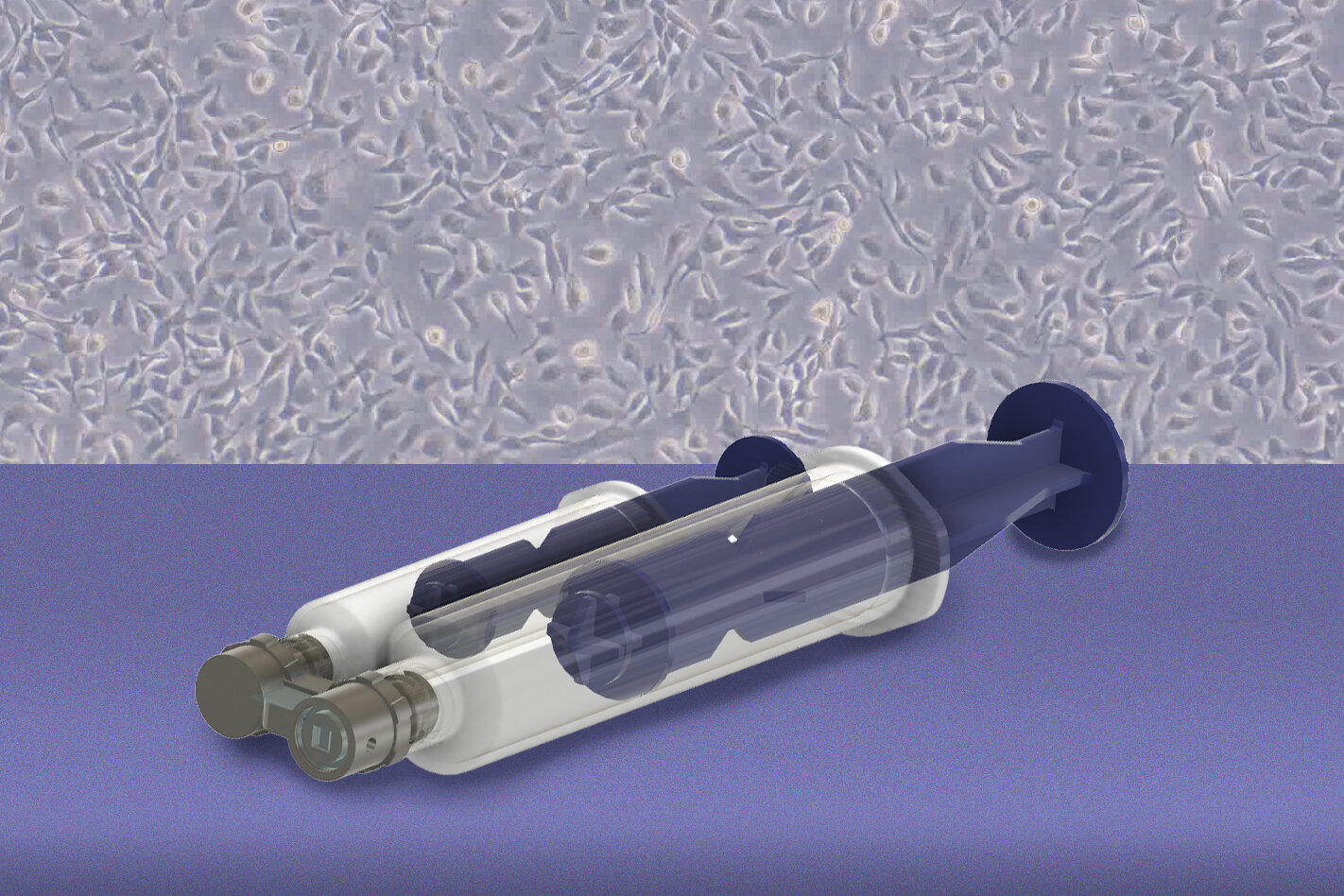
Now, researchers in the group of MIT Professor Kripa Varanasi, working with colleagues at MIT and Johns Hopkins University, have developed a handheld device capable of gently collecting living cells from specific locations to test for ovarian and many other types of cancer.
The researchers believe the technique could one day be used to catch cancers earlier and more effectively. It could also be used to create treatments based on individual patient samples.
In a study describing the system in the journal Device , the researchers showed their system enables targeted sampling of newly excised tissue, and they used it to recover living cells for cultivation and testing. The device holds a small microfluidic channel against the tissue and uses a syringe to drive fluid through the channel, applying a force parallel to the tissue surface to gently detach living cells from tiny sections of tissue.
Source link