This article has been reviewed according to Science X's editorial process and policies. Editors have highlighted the following attributes while ensuring the content's credibility:
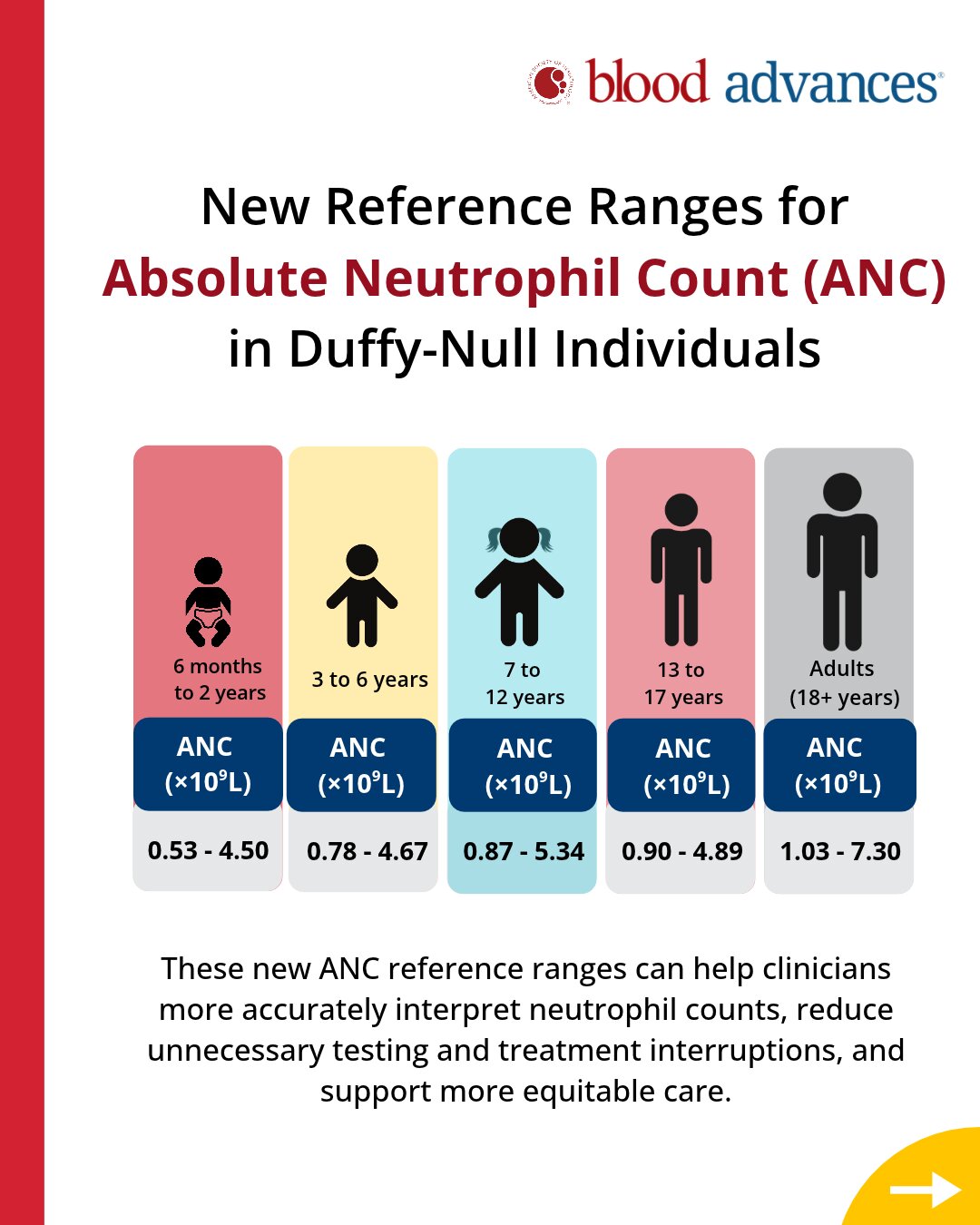
The American Society of Hematology has developed new reference ranges for children and adults with Duffy-null status, a common genetic trait associated with naturally lower circulating white blood cell counts that affects more than 66% of people with African or Mediterranean ancestry in the U.S.. These personalized reference ranges are the first of their kind and will help clinicians accurately determine normal and abnormal white blood cell counts, preventing unnecessary testing. The reference ranges have been published in Blood Advances.
Under standard reference ranges, people with Duffy-null status may be inaccurately flagged as having neutropenia, a type of abnormally low white blood cell count, which is associated with infection or underlying illness and can lead to unnecessary testing like bone marrow biopsies, exclusion from clinical trials, or discontinuation of necessary therapies like chemotherapy.
"This is a significant step for individuals with Duffy-null status, who are often told that something is wrong, even when there are no problems with their health," said Robert Negrin, ASH president. "The establishment of these reference ranges addresses a critical health equity concern that has long been needed and will make a lasting impact on the lives of individuals with Duffy-null status."
The Duffy antigen is a protein found on red blood cells, and some individuals have a genetic adaptation in which the protein is naturally absent. People who have the Duffy antigen are considered Duffy-positive, while people without it are considered Duffy-null.
Source link