This article has been reviewed according to Science X's editorial process and policies. Editors have highlighted the following attributes while ensuring the content's credibility:
The lung is divided into two main anatomical parts: the airways, called bronchioles, which carry air in and out, and the alveoli, the tiny air sacs where oxygen exchange occurs. When injury or damage occurs in either region, that region deploys its own team of specialized cells, like stem cells, to keep things working. While scientists have known that airway stem cells move into the alveoli to help repair gas-exchange tissue, can the stem cells also make the reverse journey?
In a recent study published in Nature, a team of researchers in China used a specialized technique called dual-recombinase genetic cell-tracking systems in mice to investigate whether stem cells in the alveoli could reverse course and cross anatomical boundaries to repair damaged airways.
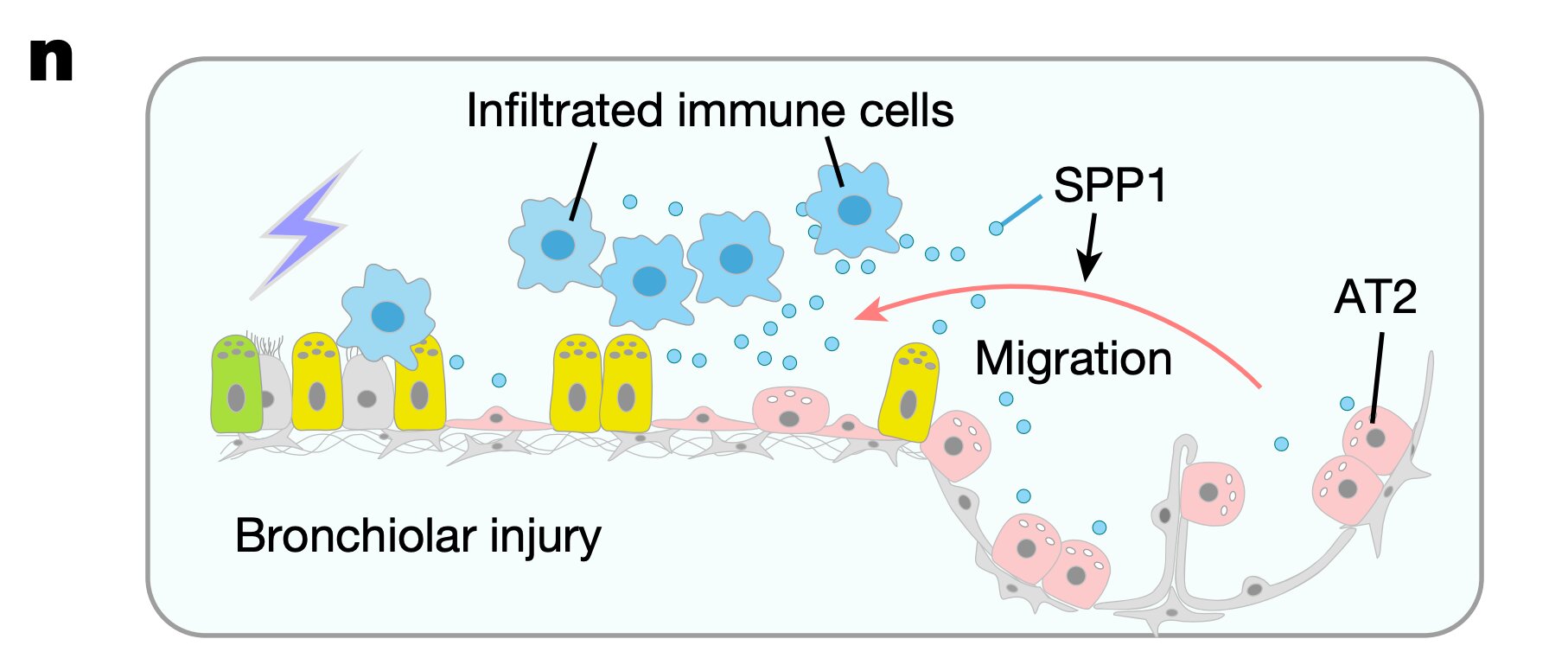
In injured mouse lungs, some alveolar type 2 (AT2) stem cells left the air sacs, crossed into the small airways and transformed into mature airway-lining cells, mainly club cells and ciliated cells, to replace damaged tissue.
Over time, these converted cells matured functionally to match native airway cells. In one chemical-injury experiment, AT2 cells produced about 52% of the regenerated club cells after four weeks. Immune cells also released a protein called SPP1, which lured AT2 cells toward the damaged airways through a receptor called integrin β1.
When diseases such as asthma, pneumonia and bronchiectasis damage the bronchial lining, the lungs can struggle to rebuild it.
Source link