This article has been reviewed according to Science X's editorial process and policies. Editors have highlighted the following attributes while ensuring the content's credibility:
Scientists have found a way to grow a realistic human lens, potentially providing a new path for the treatment of cataracts, one of the leading causes of blindness worldwide. Researchers from Anglia Ruskin University (ARU), working with colleagues at the University of Osaka in Japan and Cardiff University, have created tiny "mini lenses" in the lab using human stem cells for the very first time.
These miniature lenses closely resemble the natural lens inside the human eye and could help scientists better understand how to eventually prevent or treat cataracts.
Cataracts are formed when proteins inside the lens become damaged or clump together, causing a cloudiness that prevents the lens from effectively focusing light onto the retina. Cataracts are one of the leading causes of vision loss and blindness, estimated to affect 94 million people worldwide, and can currently only be treated with surgery.
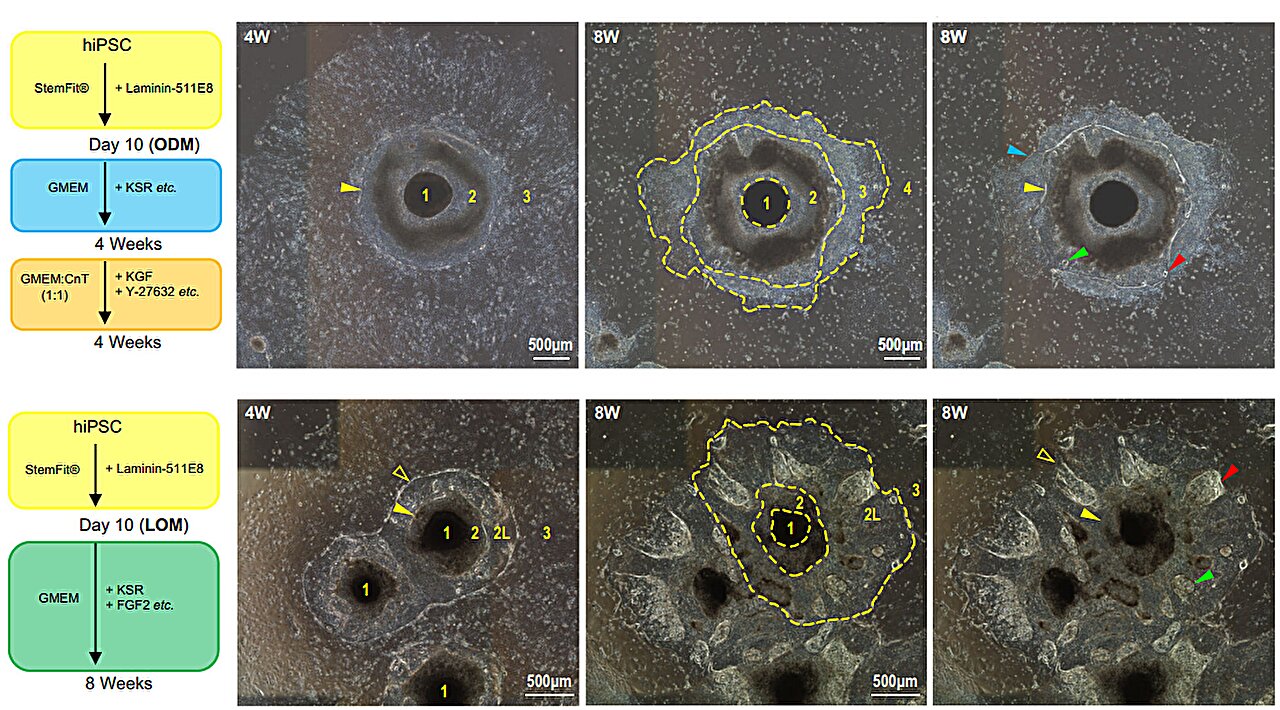
In this study, published in the journal npj Regenerative Medicine, researchers started with human induced pluripotent stem cells (iPSCs), which are adult cells that have been reprogrammed into a stem cell-like state. They then developed a growth method that encouraged the cells to organize themselves into lens-like structures.
These lens organoids possess many of the key features seen in real human lenses, including the proteins that keep human lenses transparent, structures resembling the lens capsule, which surrounds and protects the lens, and highly organized fiber cells that are contained within human lenses.
Source link