This article has been reviewed according to Science X's editorial process and policies. Editors have highlighted the following attributes while ensuring the content's credibility:
Rheumatic heart disease (RHD) claims hundreds of thousands of lives each year, devastating children and young adults in low- and middle-income countries where access to specialized ultrasound equipment and refrigerated testing labs is virtually nonexistent. Inexpensive penicillin could stop the progressive valve damage if the disease is detected early, yet millions remain undiagnosed until irreversible heart failure sets in.
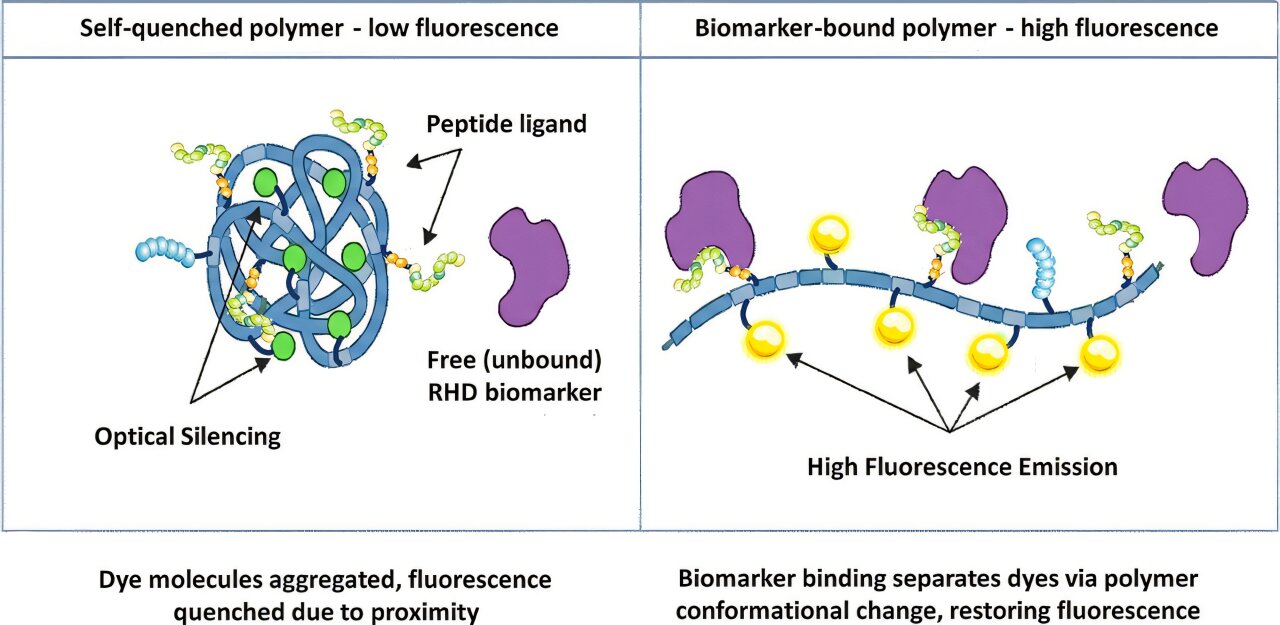
Now, researchers from Ben-Gurion University of the Negev (BGU) have engineered a synthetic, antibody-free diagnostic probe that detects cardiac inflammatory biomarkers in blood without requiring cold-chain refrigeration or complex laboratory machinery. The study, published in ACS Sensors, lays the groundwork for affordable, rapid point-of-care screening in rural and underserved communities.
The research was led by professor Ayelet David alongside Ilana Teboul, Naama Shlush, Maya Droby and Dr. Yvonne Ventura from BGU's Department of Clinical Biochemistry and Pharmacology, in collaboration with the late professor Robert A. Levine of Massachusetts General Hospital and Harvard Medical School.
Triggered by untreated group A streptococcal throat infections, rheumatic fever causes chronic inflammation that progressively thickens, scars and calcifies cardiac valves. Although regular antibiotic injections can prevent recurrent damage, identifying patients before heart valves are destroyed currently demands echocardiography machines or complex antibody-based blood assays such as ELISA.
Standard ELISA testing relies on biological antibodies that are expensive to manufacture, vulnerable to heat degradation and dependent on multistep processing. In low-resource clinics lacking continuous refrigeration or automated equipment, widespread immunoassay screening is virtually impossible.
Source link