This article has been reviewed according to Science X's editorial process and policies. Editors have highlighted the following attributes while ensuring the content's credibility:
A novel potential treatment approach for motor neuron disease (MND), similar to the approach being pursued with an investigational drug that recently entered human clinical trials, has been shown to restore broken communication between neurons in lab models of the disease. This could have beneficial therapeutic implications for 97% of people with MND, for whom there is currently no significant disease-modifying treatment.
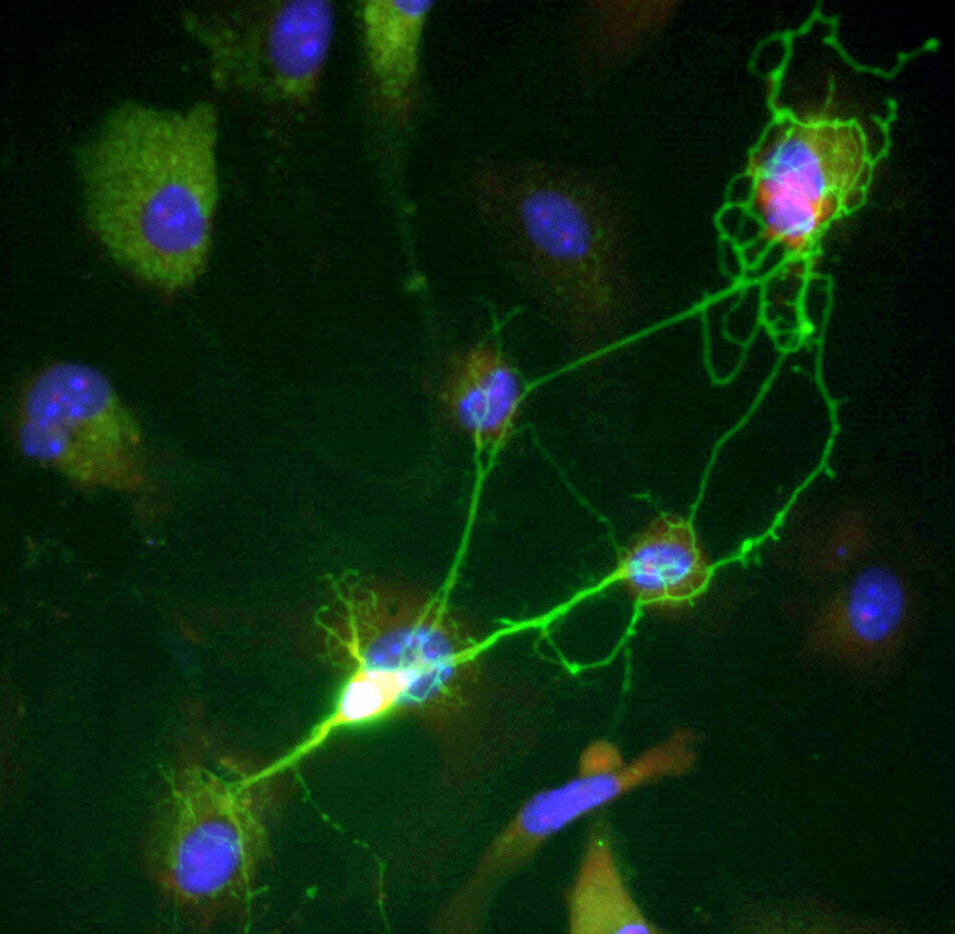
In a new study published in Nature, researchers from King's College London, University College London (UCL) and the Francis Crick Institute, along with Leibniz-FMP and Trace Neuroscience, pinpointed a single error in a key gene involved in MND that causes communication between neurons to break down, and used a drug to restore it in human neurons in the lab.
MND/ALS is a devastating and ultimately fatal disease that causes progressive muscle weakness due to the degeneration of motor neurons in the brain and spinal cord. As the disease advances, patients gradually lose the ability to move, speak, swallow and breathe. It is estimated to affect 1 in 300 people in their lifetime, and there is no cure.
Currently, there are approved and experimental treatments for two rare genetic forms of ALS, which account for under 3% of cases. There is no significant disease-modifying treatment available for the remaining 97%. All of these cases share one feature: a key protein called TDP-43 stops doing its job correctly.
Source link