This article has been reviewed according to Science X's editorial process and policies. Editors have highlighted the following attributes while ensuring the content's credibility:
New research led by experts at the University of Nottingham has revealed how collagen in the tumor environment can alter bowel cancer cell behavior and influence inflammatory responses to chemotherapy, highlighting potential new avenues for future research into cancer treatment. The findings, published in the Journal of Experimental & Clinical Cancer Research, highlight the importance of the environment surrounding cancer cells in shaping how they behave and respond to treatment.
The study was led by Dr. Paloma Ordóñez-Morán from the University of Nottingham's School of Medicine. This four-year project was undertaken as a Ph.D. project by student Samna Sagadevan through the Medical Research Council iCASE program. It was a collaborative team effort, made possible by close partnerships between researchers, pathologists, nurses, gastroenterologists and surgeons whose contributions were essential to the project's success.
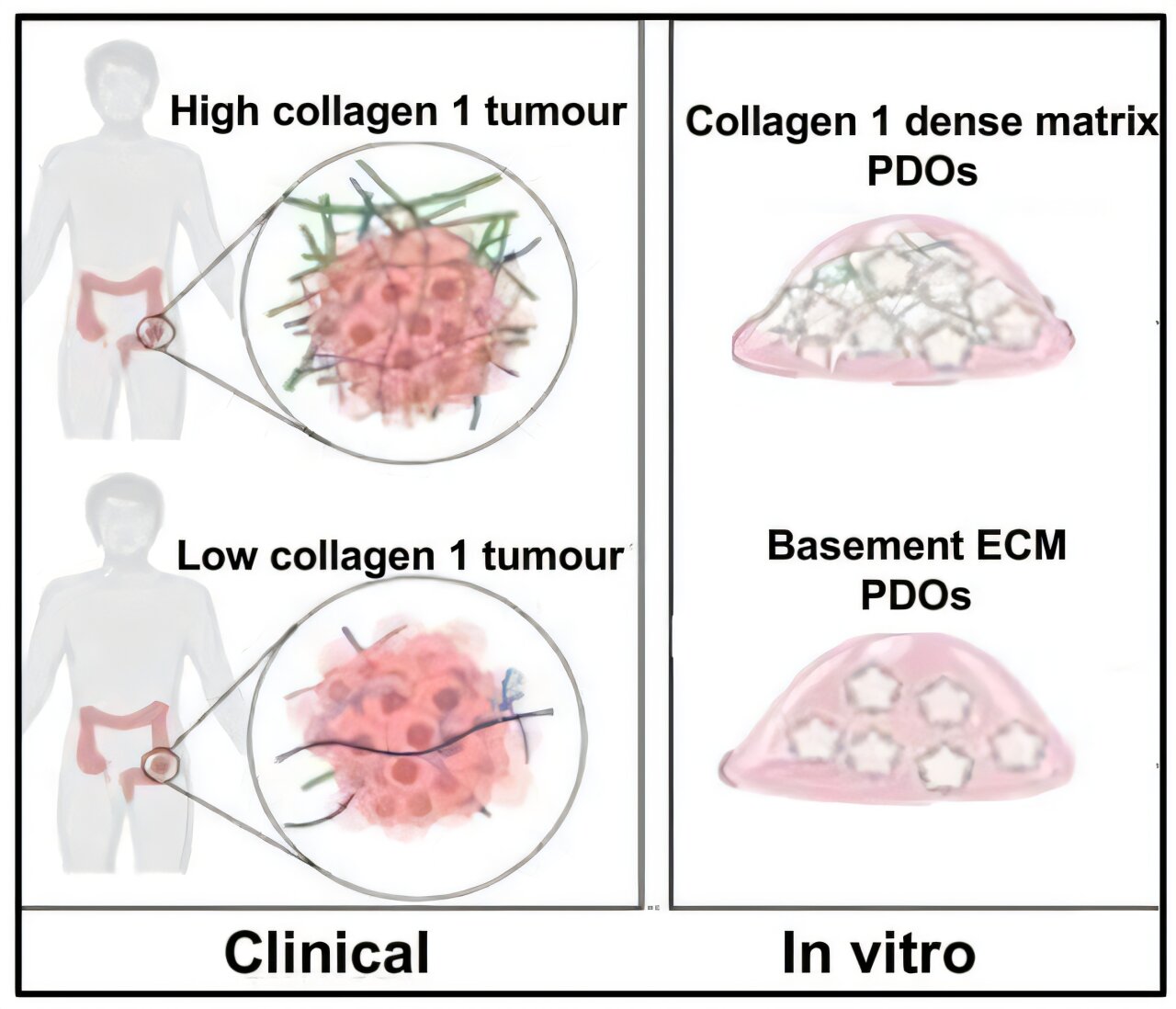
Bowel cancer, also known as colorectal cancer, develops within a complex tumor environment. Proteins such as collagen, which provides structural support to tissues, can influence how cancer cells behave. However, how these interactions affect cancer progression and responses to chemotherapy remains only moderately understood.
To investigate this, researchers grew mini-tumors, known as patient-derived organoids (PDOs), from colorectal cancer tissue donated by patients in Nottingham. These organoids allowed the team to study cancer cell behavior in the laboratory while retaining important features of the original tumors.
The researchers exposed the organoids to collagen, a structural protein found in the tissue surrounding tumors, to recreate aspects of the tumor environment.
Source link