This article has been reviewed according to Science X's editorial process and policies. Editors have highlighted the following attributes while ensuring the content's credibility:
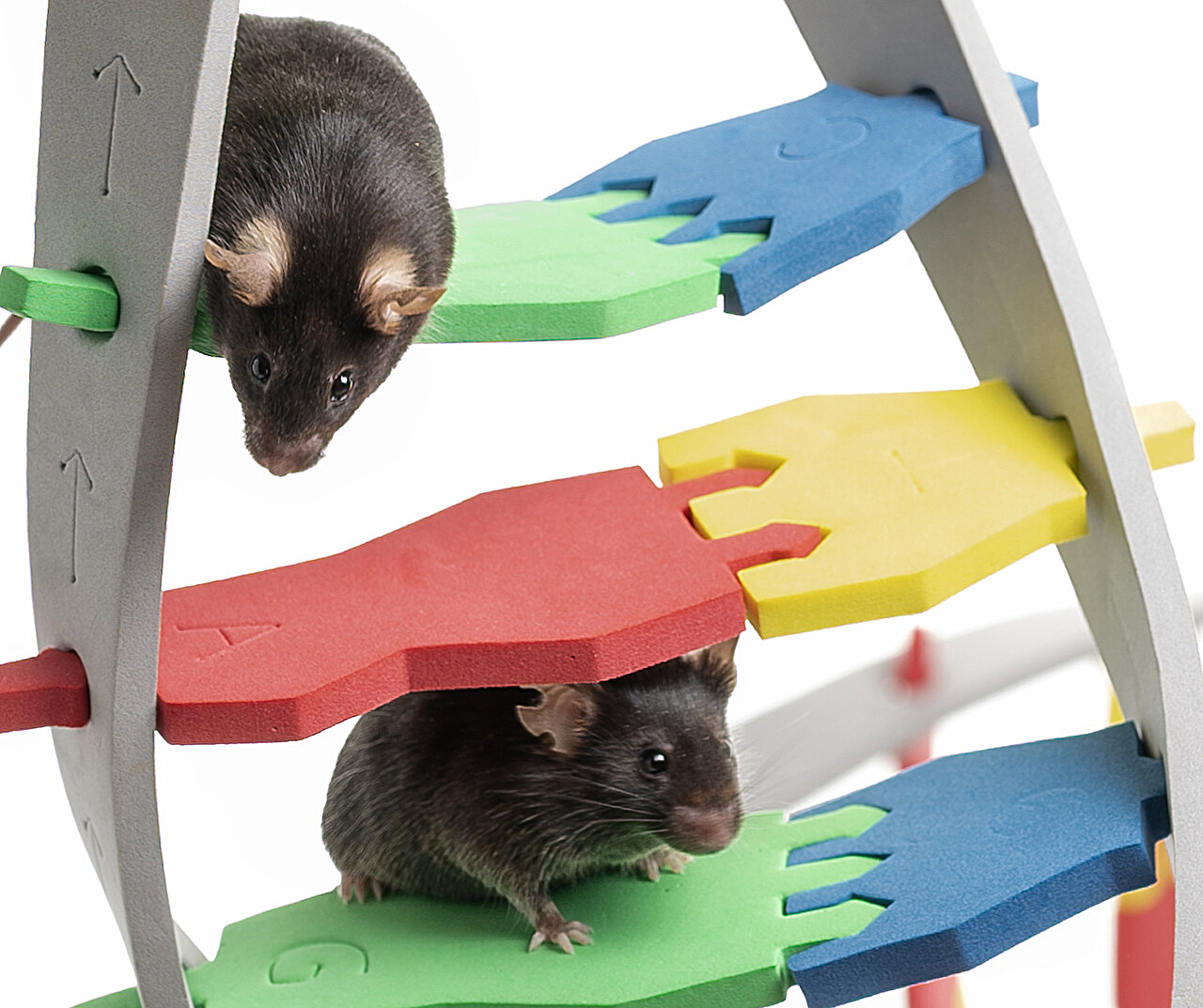
A meta-analysis on the effects of environmental enrichment on the rodent brain has identified common patterns in the expression of genes associated with communication between neurons and synaptic plasticity, processes that are essential for brain adaptation.
The study, published in the journal Molecular Neurobiology, is co-led by Federico Miozzo, a researcher at the Institute for Neurosciences (IN), a joint center of the Spanish National Research Council (CSIC) and Miguel Hernández University of Elche (UMH), and Bartek Wilczyński, a researcher at the University of Warsaw (Poland).
The findings reinforce the role of the AP-1 transcription factor in the changes associated with environmental stimulation, in line with previous research by the team led by Ángel Barco at the Institute for Neurosciences.
The brain changes in response to experiences, but identifying the molecular mechanisms underlying these changes is challenging because each study may involve different experimental conditions.
"One of the strengths of meta-analysis is that, although the studies differ from one another, analyzing them together increases the number of samples available. This makes it possible to detect common patterns that might otherwise go unnoticed in individual studies," explains Miozzo, a researcher in the Transcriptional and Epigenetic Mechanisms of Neuronal Plasticity laboratory at the IN CSIC-UMH.
To identify these patterns, the team jointly analyzed data from previous studies on gene expression in the brains of rodents exposed to an enriched environment.
Source link