This article has been reviewed according to Science X's editorial process and policies. Editors have highlighted the following attributes while ensuring the content's credibility:
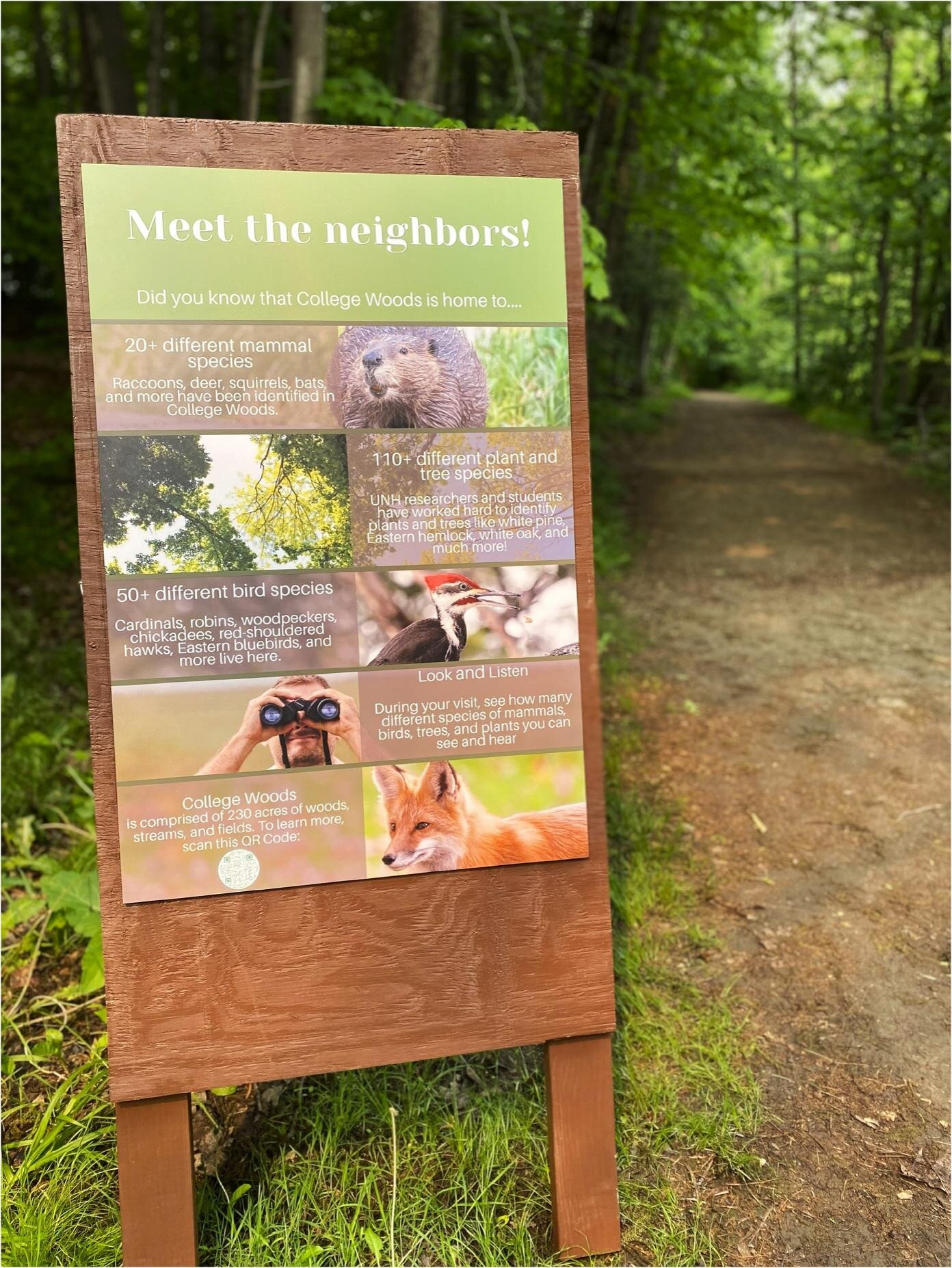
Ever wonder why a walk through the woods can be such a mood booster? Research from the University of New Hampshire shows that it can be as simple as the sounds people experience in nature, people's awareness of biodiversity—the many species living in the woods—and educational signage sharing information about the variety of animals, birds and trees.
"Previous nature-health research had a major limitation: it could tell us that biodiversity is good for mental health but couldn't tell land managers, park planners or health care providers what to actually do with that information," said Lauren Ferguson, assistant professor of recreation management and policy. "The research lacked specificity about which aspects of biodiversity matter most and how to enhance the mental health benefits of nature visits."
The study, recently published in Landscape and Urban Planning, surveyed visitors to College Woods—a 230-acre (93-hectare) natural area bordering the UNH campus in Durham—between June 2023 and May 2024. Researchers surveyed visitors both before and after their visits and also measured biodiversity using wildlife cameras, bird surveys and vegetation records.
Overall, visitors reported more positive emotions, fewer negative sentiments and greater feelings of restoration, including relaxation and recovery from mental fatigue, after spending time in the woods. On average, participants' self-reported restoration scores increased by nearly 30% following their visits.
Additionally, researchers found that visitors' overall perceptions of biodiversity were stronger predictors of mental well-being than the actual number of bird and mammal species researchers measured.
Source link