This article has been reviewed according to Science X's editorial process and policies. Editors have highlighted the following attributes while ensuring the content's credibility:
In an HIV prevention trial, an antibody blocked the viruses most vulnerable to it, but others broke through. Now researchers have uncovered how HIV evolved after those infections—and why the amount of antibody in the body is an essential part of the story.
The Antibody-Mediated Prevention (AMP) trials enrolled more than 4,600 volunteers across Africa, the Americas and Europe to test VRC01, a laboratory-made broadly neutralizing antibody (bnAb). Such antibodies can block many different strains of HIV and, unlike a vaccine, can be given directly rather than relying on the body to produce them.
In the AMP trial, VRC01 did not significantly reduce HIV infections overall, although it reduced infections caused by highly sensitive strains by about 75%. This study showed that HIV requires high antibody titers, and it illustrates the importance of maintaining those titers throughout the dosing cycle.
"We underestimated the dose of antibody required to be effective in vivo," said professor Larry Corey of Fred Hutch Cancer Center, a lead investigator of AMP.
In other words, there were extended periods when antibody levels were too low to block less-sensitive viruses, creating opportunities for escape.
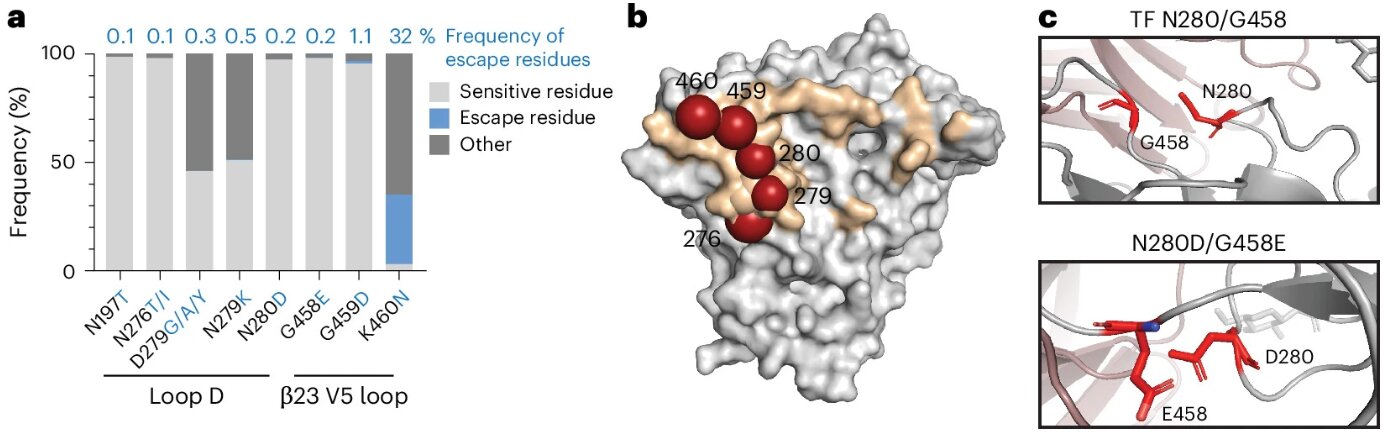
A new study published in Nature Microbiology has now examined what happened after infection in people who received VRC01. The findings show how a virus can respond to antibody pressure—and offer clues for improving future antibodies and vaccines.
Source link