This article has been reviewed according to Science X's editorial process and policies. Editors have highlighted the following attributes while ensuring the content's credibility:
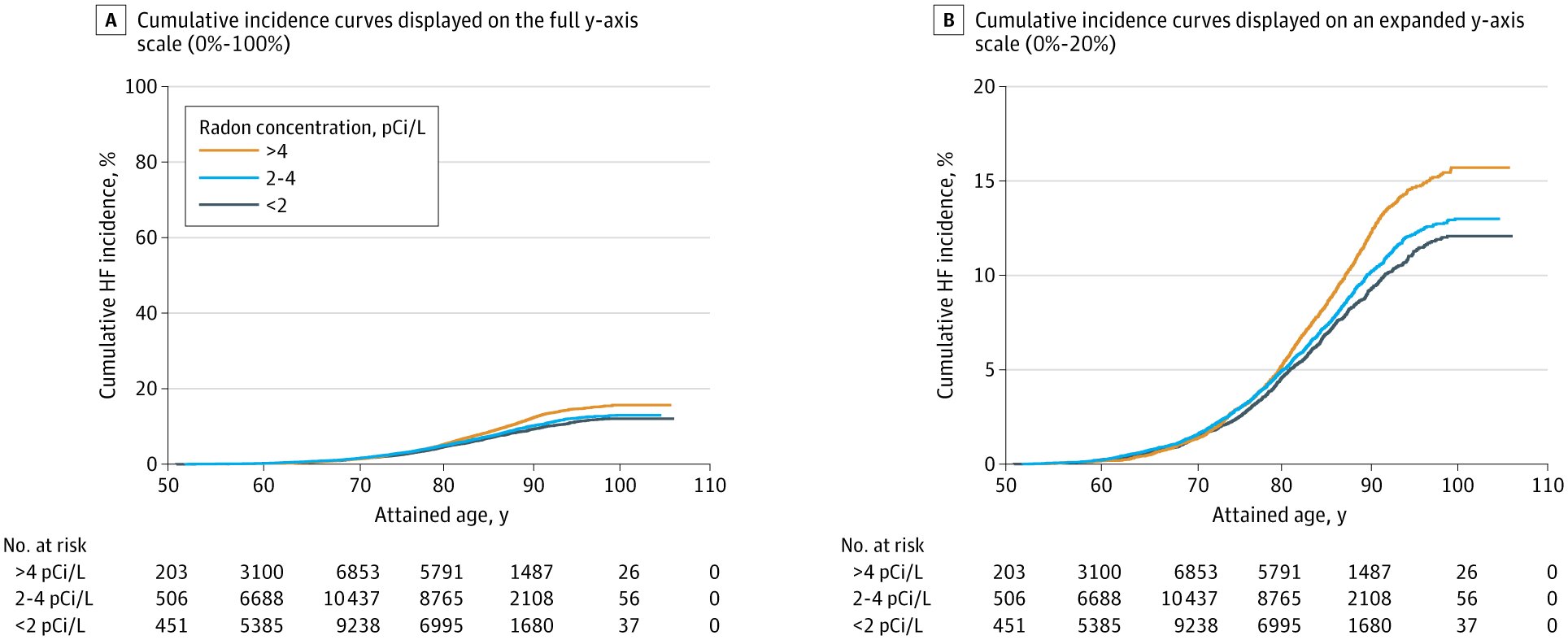
New findings from a study of women who have gone through menopause suggest that those living in areas with higher estimated indoor radon levels may be at higher risk of heart failure. The study, published in JAMA Network Open, was led by researchers at the UNC Gillings School of Global Public Health and adds the newest evidence that radon exposure may pose a significant risk to heart health among aging women.
Radon has long been linked to lung cancer, but a growing body of research has also uncovered links between increased radon exposure and common cardiovascular diseases like heart attack and stroke. Yet current United States Environmental Protection Agency (EPA) radon policy remains exclusively focused on preventing lung cancer, highlighting the continued importance of radon-cardiovascular disease association studies.
"Heart failure is a globally burdensome and increasingly common form of cardiovascular disease among aging women," said lead author Shu Chen, a research collaborator in the Gillings School's Department of Epidemiology, "so identifying readily testable and modifiable factors, like home radon levels, that may be related to it in this at-risk population is critical."
Radon is a colorless and odorless yet radioactive gas that passes from bedrock and soil through basement floor slabs, porous or cracked foundation walls and crawl spaces into homes where it can build up. S. population may reside in places that exceed this level.
Source link