This article has been reviewed according to Science X's editorial process and policies. Editors have highlighted the following attributes while ensuring the content's credibility:
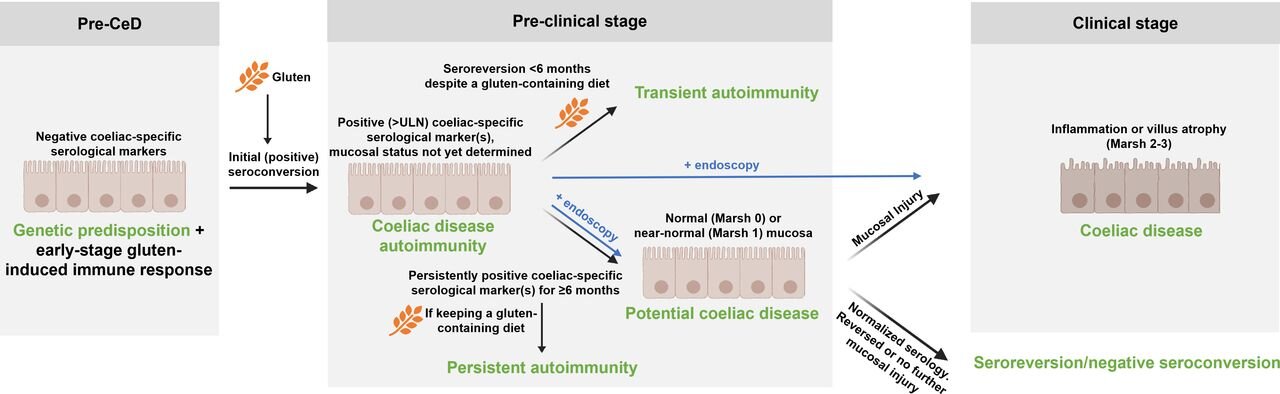
With increasing research on the interplay between genetics and environmental risk factors in the early stages of celiac disease, the need to harmonize scientific terms and concepts in this field has increased. In an effort led by researchers at Karolinska Institutet and the Mayo Clinic, 22 scientists from seven countries have published a review on the stages of early celiac disease. The paper is published in Gut.
Celiac disease (CeD) is an immune-mediated disease characterized by small intestinal enteropathy. It has a rising incidence worldwide and currently affects about 1% of the global population.
The International Society for the Study of Coeliac Disease (ISSCD) therefore set up a task force, the so-called Before Coeliac Disease (B4CeD) task force, to define crucial concepts about the early development of CeD. As part of this work, some 2,623 scientific publications were reviewed, of which 438 were read in full.
"The aim of this effort was to harmonize concepts to advance better research and clinical practice targeting individuals who are at the early development stage of CeD," says first author Jonas F. Ludvigsson, a professor at the Department of Medical Epidemiology and Biostatistics, Karolinska Institutet, and a pediatrician at Örebro University Hospital.
"We hope that consistent use of terms and concepts will facilitate comparison of research findings, increase translatability into clinical practice and improve clinical guidelines," Ludvigsson continues.
Source link