This article has been reviewed according to Science X's editorial process and policies. Editors have highlighted the following attributes while ensuring the content's credibility:
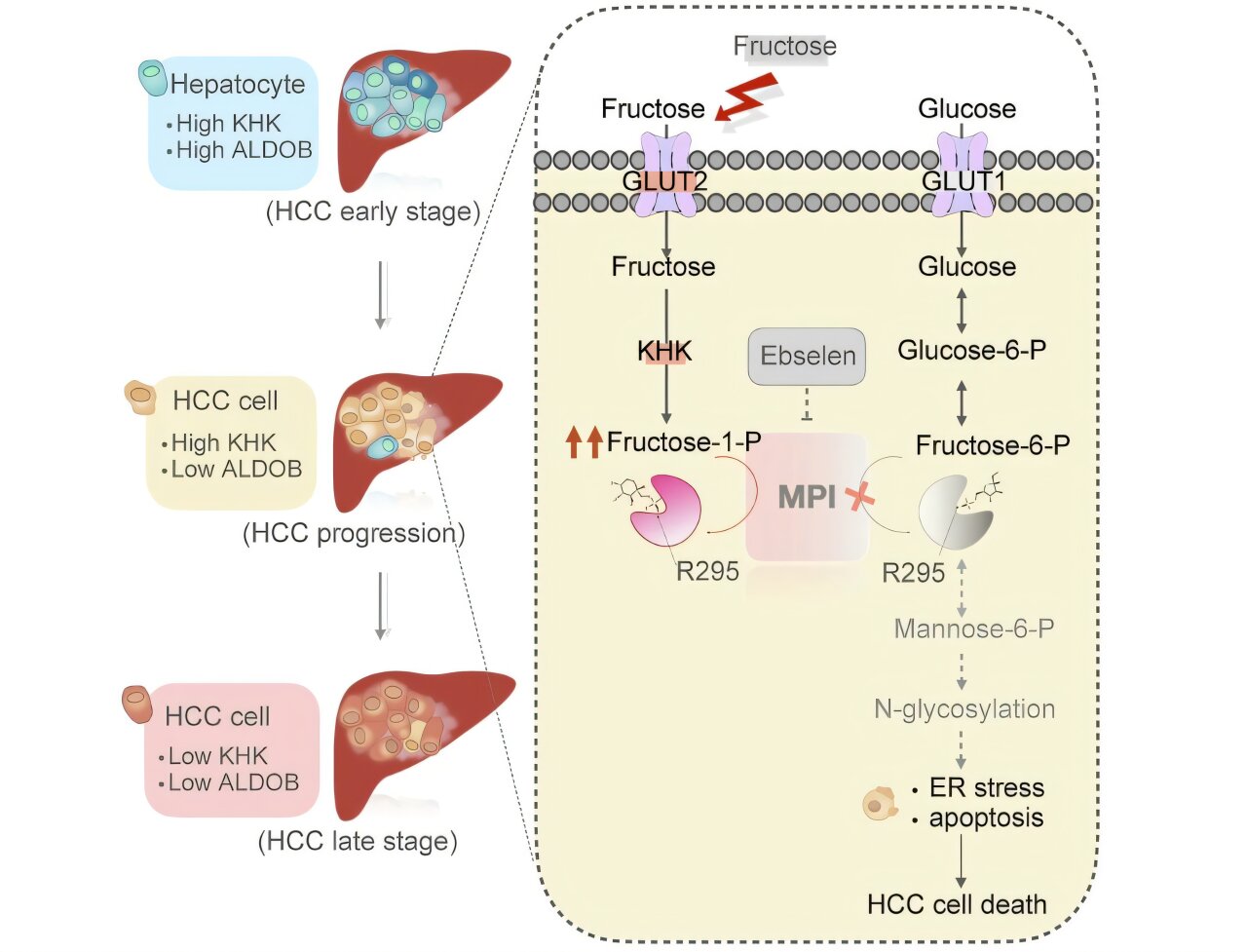
Fructose is an important nutrient that, despite having a chemical structure very similar to that of glucose, is metabolized very differently in the body. Research into fructose metabolism and its regulation of metabolism in the human body has in recent years become a frontier topic in the life sciences and medicine. A new study led by researchers at City University of Hong Kong (CityUHK) has found that in the specific metabolic context of hepatocellular carcinoma (HCC), dietary fructose does not fuel tumor growth. Instead, it can suppress it, revealing a previously unknown anticancer mechanism.
The team, led by professor Yin Huiyong, from the Department of Biomedical Sciences in CityUHK's College of Biomedicine, and Zhong Shanshan, a research assistant professor in CityUHK's Tung Biomedical Sciences Center, published its findings in the journal Signal Transduction and Targeted Therapy.
HCC is one of the leading causes of cancer deaths worldwide, and its metabolic pathways are complex and variable. The team found that as HCC progresses, fructose-1,6-bisphosphate aldolase B (ALDOB), the key gene responsible for breaking down fructose, is progressively downregulated. This downregulation occurs earlier and more markedly than in other genes involved in fructose metabolism, such as GLUT2 and KHK. In essence, although HCC cells retain the ability to take up and initially phosphorylate fructose, they become increasingly unable to fully break it down.
To model this metabolic deficiency, which is common in human HCC, the team established a liver cancer mouse model with a liver-specific knockout of the ALDOB gene.
Source link