This article has been reviewed according to Science X's editorial process and policies. Editors have highlighted the following attributes while ensuring the content's credibility:
Inherited cardiomyopathies—diseases of the heart muscle, which cause the heart to have a harder time pumping blood to the rest of the body—are the leading cause of heart failure in young adults. Desmin-related cardiomyopathy (DRM) is one such familial disease that affects approximately 1 in 2,000 individuals worldwide. No disease-specific therapies exist for DRM, with patients receiving only generic heart failure medicines.
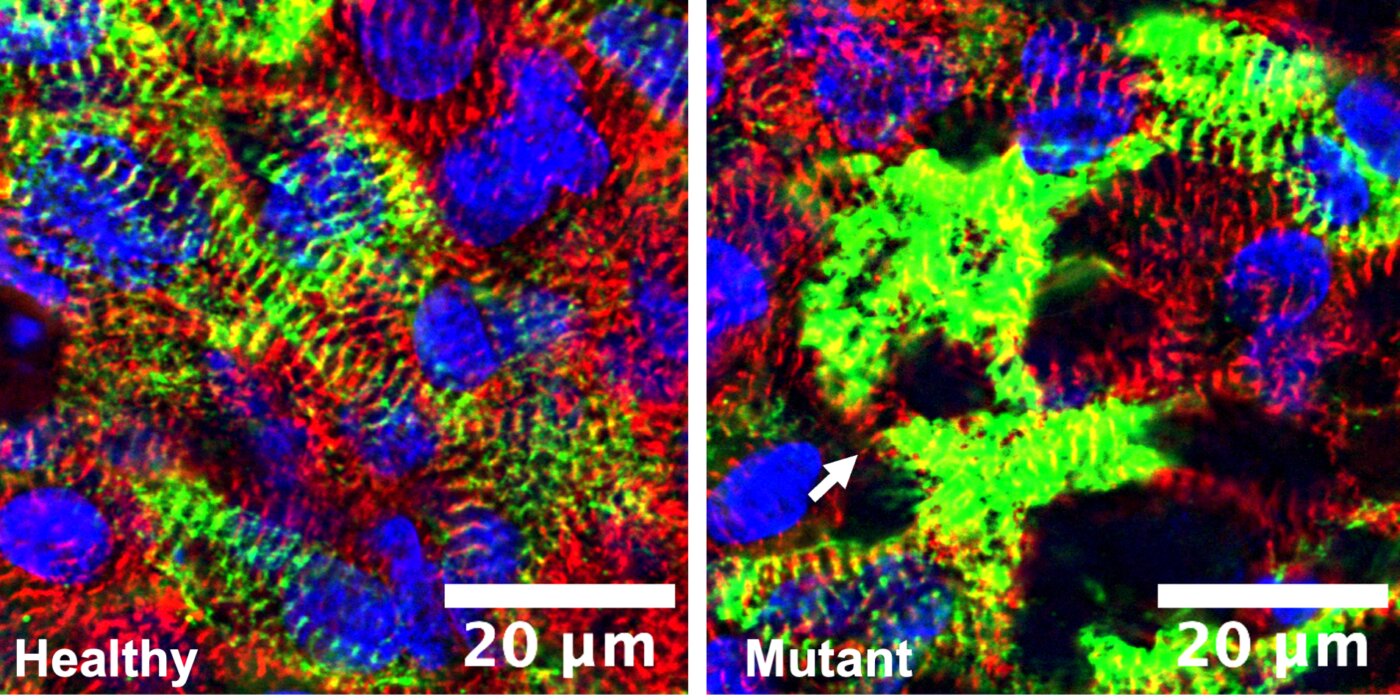
DRM is caused by mutations in the genes for desmin—a muscle-specific intermediate filament protein—or its protein-folding chaperon, αB-Crystallin (CRYAB). These mutations are thought to cause desmin to misfold and form toxic clumps inside heart muscle cells.
Deadly variations of this disease have been difficult to study in part because existing mouse models of the disorder require massive overexpression of mutant CRYAB.
Since part of how the toxic protein clumps form is through proteins interacting with one another, there are concerns about how useful a model that overexpresses the proteins is—after all, more protein would mean more interaction with other molecules.
Now the first human model of CRYAB-linked DRM has been developed by researchers at Washington University in St. Louis, using micro-engineered tissues and induced pluripotent stem cells that express mutant CRYAB at a concentration that closely mirrors actual levels in the human body.
"Up until now, progress has been hindered by reliance on experimental models with uncertain translational value," said Nathaniel Huebsch, an associate professor of biomedical engineering at WashU McKelvey Engineering.
Source link