
This article has been reviewed according to Science X's editorial process and policies. Editors have highlighted the following attributes while ensuring the content's credibility:
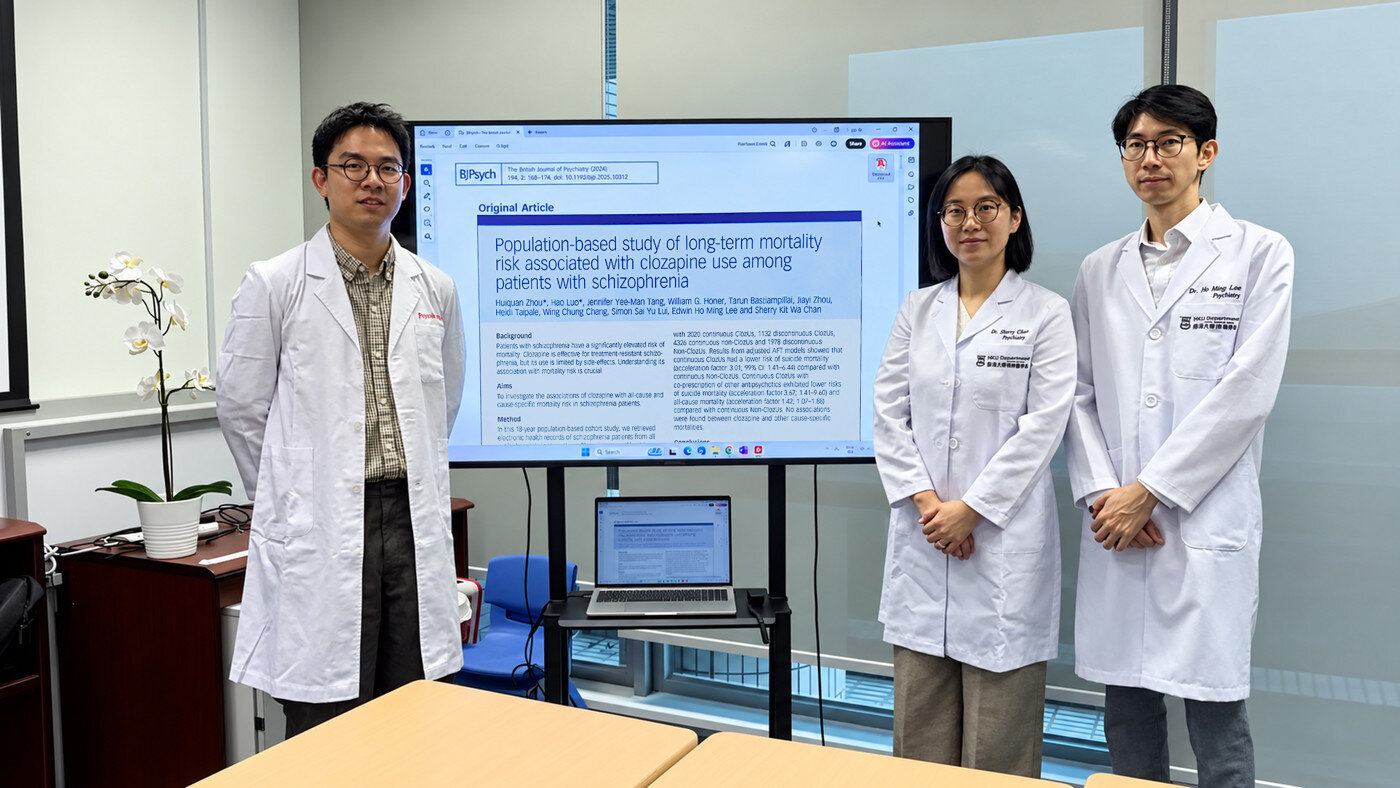
An international research team led by the Department of Psychiatry, School of Clinical Medicine, LKS Faculty of Medicine of the University of Hong Kong (HKUMed), has completed a long-term population-based research study to improve care for people with treatment-resistant schizophrenia (TRS), the most severe form of this mental health condition. The findings reinforce the importance of timely access to clozapine and provide the first large-scale evidence from a Chinese population to support a review of Hong Kong's long-term blood monitoring requirements.
Currently, the requirements mandate monthly blood tests while patients are taking clozapine according to the existing guideline, which can impose a substantial burden on patients, their families and clinical services. The study was published in The British Journal of Psychiatry.
Clozapine is the only antipsychotic approved by the U.S. Food and Drug Administration specifically for TRS. While highly effective, concerns about neutropenia, a reduction in infection-fighting white blood cells, necessitate regular blood testing. In this HKUMed-led study, researchers examined 20 years of Hong Kong health record data between 2003 and 2019, with follow-up until 2023. It compared data from 4,868 people who started clozapine with that of 38,277 people receiving other second-generation antipsychotics.
The study found that the risk of clozapine-associated neutropenia was highest during the first 18 weeks of treatment and progressively decreased over time. After approximately two years, the risk profile was comparable to that of people receiving non-clozapine second-generation antipsychotics.
Source link





