This article has been reviewed according to Science X's editorial process and policies. Editors have highlighted the following attributes while ensuring the content's credibility:
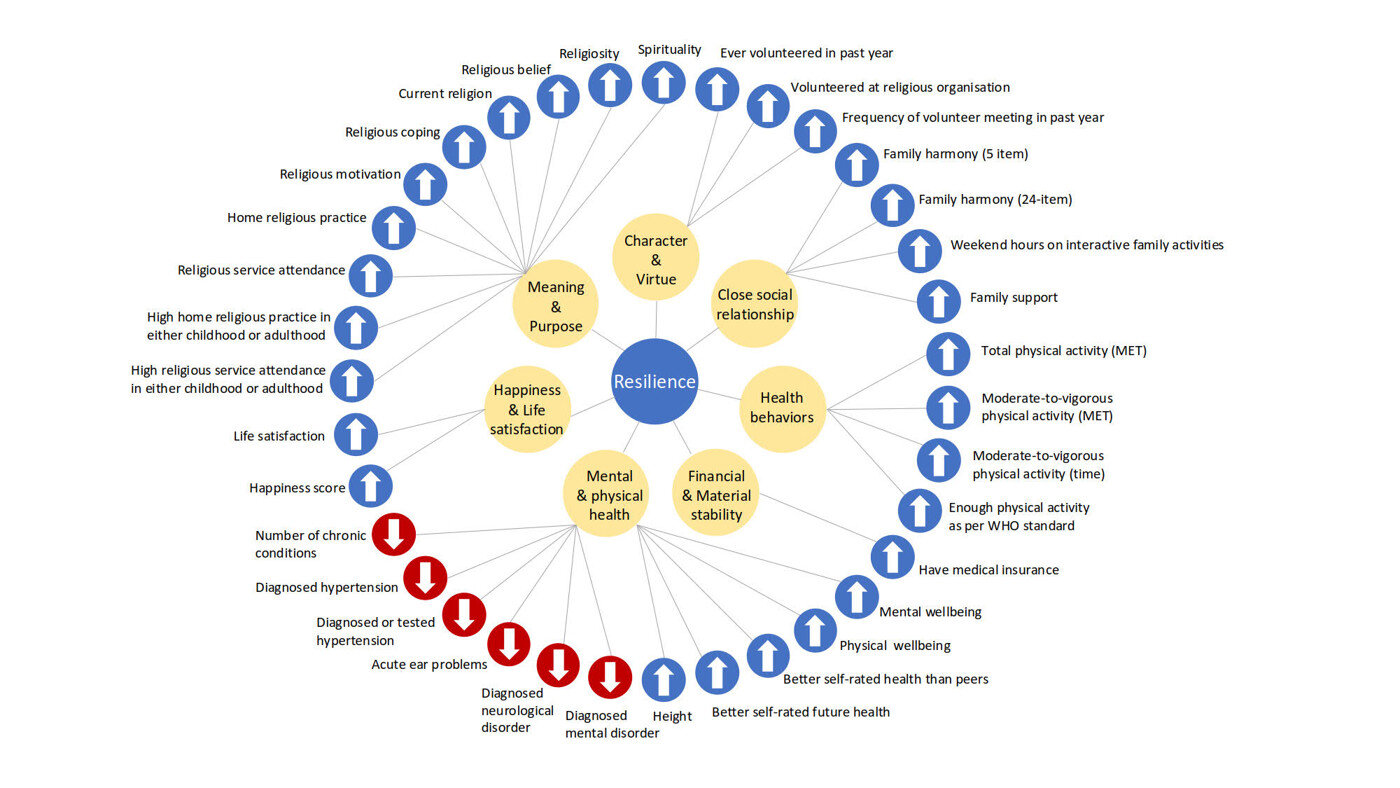
A research team led by the School of Public Health, LKS Faculty of Medicine of the University of Hong Kong (HKUMed), recently conducted one of the largest and most systematic studies to date on predictors of psychological resilience. Analyzing data from 26,210 Hong Kong residents, the researchers systematically evaluated 208 candidate predictors and ultimately identified 35 factors associated with an individual's capacity to cope with adversity.
The study found that everyday factors, such as family relationships, volunteering, physical activity, life satisfaction and religious activities, are associated with higher psychological resilience.
Published in the journal Nature Mental Health, these findings can help strengthen public resilience and inform strategies for preventing mental health conditions and reducing their burden on individuals and society.
Psychological resilience is the ability to maintain or recover mental health in the face of adversity. Despite growing access to evidence-based treatments, the global prevalence of stress-related mental health conditions, such as depression and post-traumatic stress disorder (PTSD), has not declined. This indicates that while current treatment approaches can address existing cases, they do not sufficiently prevent the emergence of mental health issues. Therefore, it is crucial to identify factors that contribute to psychological resilience.
Previous research on predictors of resilience has often focused on a single factor at a time and involved primarily Western populations. This study used data from the FAMILY Cohort, a large population-based prospective cohort established by HKUMed School of Public Health.
Source link