This article has been reviewed according to Science X's editorial process and policies. Editors have highlighted the following attributes while ensuring the content's credibility:
One of the great hopes of cancer medicine over the past decade has been a simple blood test that would detect cancer at its earliest stages, help physicians choose the right treatment and even predict the risk of recurrence. Known as liquid biopsies, these tests work by identifying traces of cancer cells in the bloodstream. Although they are already used to tailor treatment for some patients, they still struggle to detect cancer early in the general population or predict whether the disease will return after treatment.
One reason is that, in the early stages, genetic traces of cancer in the blood are extremely scarce and hard to detect without triggering false alarms—results suggesting cancer when none is present.
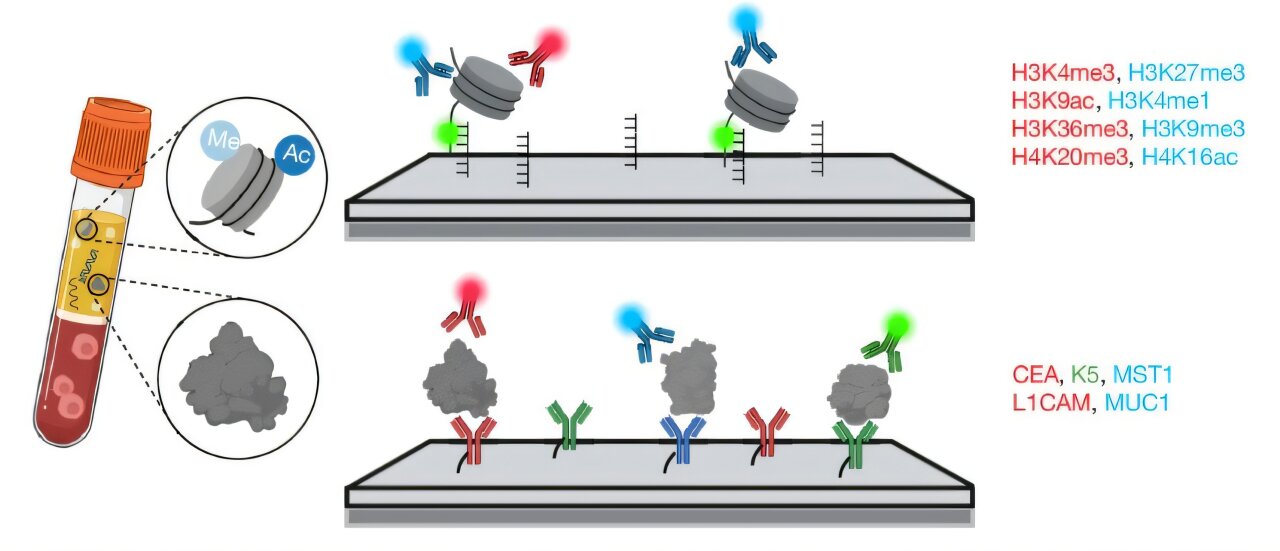
Now researchers from the laboratories of Guy Ron at the Hebrew University of Jerusalem and Efrat Shema at the Weizmann Institute of Science have developed a blood test that distinguishes with high accuracy between women with early-stage breast cancer and healthy women. The test also outperforms conventional tissue biopsies in predicting the risk of recurrence after treatment.
The findings, published in Nature, grew out of a collaboration with physicians at Kaplan Medical Center in Rehovot. Together, the researchers decoded the distinctive epigenetic signatures of breast tumors and identified a particularly aggressive population of cells lurking within them.
If DNA is the cookbook that every cell in the body keeps on its shelf, epigenetic tags are the sticky notes and bookmarks telling the cell which recipes to follow and how often to use them.
Source link