This article has been reviewed according to Science X's editorial process and policies. Editors have highlighted the following attributes while ensuring the content's credibility:
Ovarian cancer is often diagnosed after it has already spread to other parts of the body, at which point the five-year survival rate is under 30%. Further complicating treatment, standard therapies cause substantial harm to healthy cells alongside cancerous ones. But what if ovarian cancer treatment could more specifically target cancerous cells, causing less harm to the rest of the body?
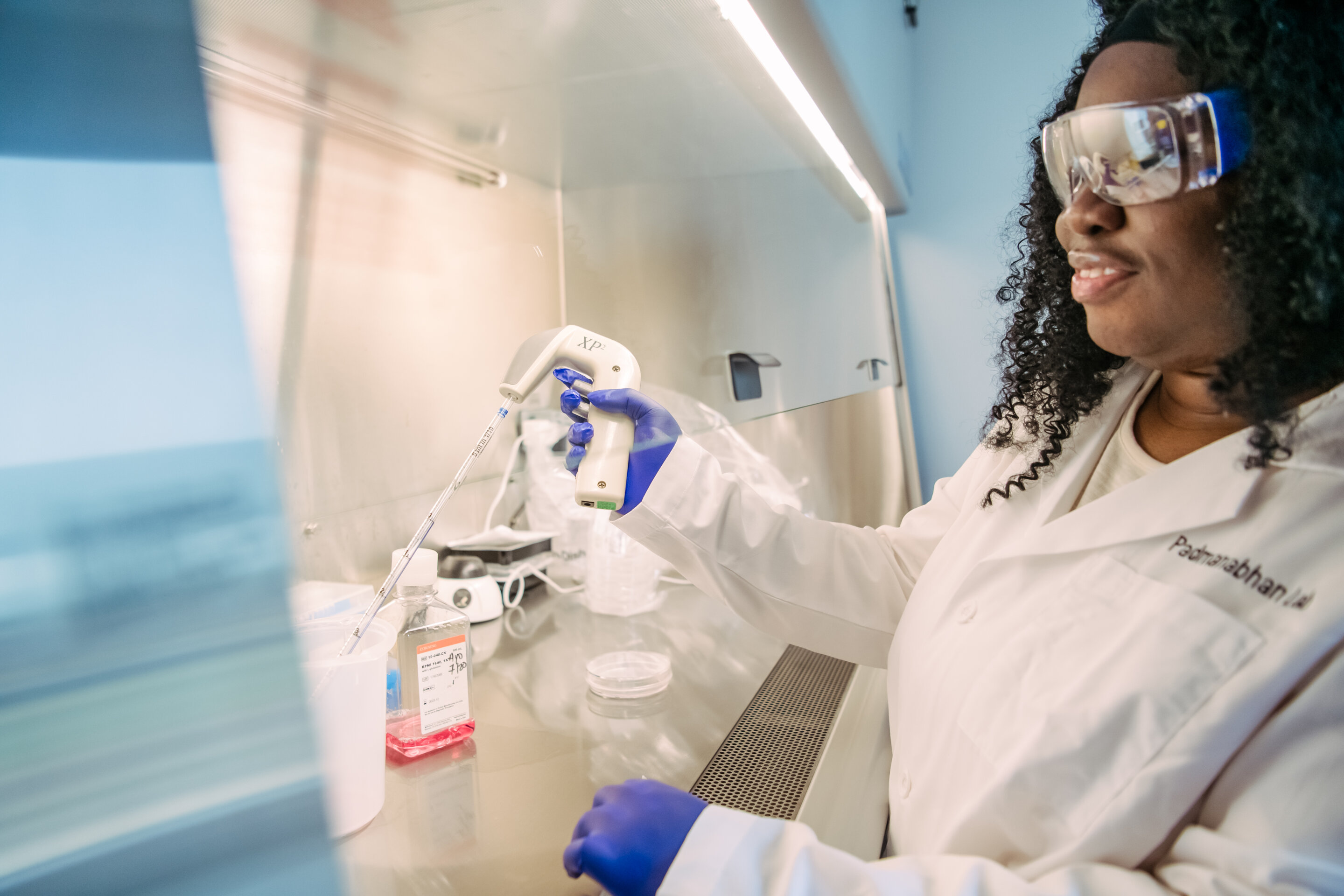
New research from Achuth Padmanabhan's lab at the University of Maryland, Baltimore County (UMBC), offers hope in the form of a potential molecular target for new cancer drugs: an enzyme called USP15, which ovarian cancer cells appear to rely on more heavily than normal cells.
Biological sciences Ph.D. student Ayokunnumi "Ayo" Ogunsanya led the work, which included experiments in cells and in mice. The results show that lowering USP15 levels causes a constellation of effects that make it a prime target for new treatments: It slows cancer-cell growth, prevents chromosomes in cancer cells from separating cleanly during division (leading to DNA damage and cell death), reduces the cells' ability to migrate and invade other tissues, and makes them more sensitive to common chemotherapy drugs.
Like much of science, this discovery began serendipitously. As a postdoctoral fellow at Baylor College of Medicine, Padmanabhan was studying the protein p53, which in its normal form helps prevent tumor formation. Mutations in the gene that codes for p53 occur in nearly every case of the most common and lethal form of ovarian cancer and are common across a wide range of cancer types.
Source link