This article has been reviewed according to Science X's editorial process and policies. Editors have highlighted the following attributes while ensuring the content's credibility:
Urinary tract infections, or UTIs, are among the most common bacterial infections and are caused mostly by the uropathogenic bacterium Escherichia coli. But even after antibiotic treatment, many patients experience another UTI.
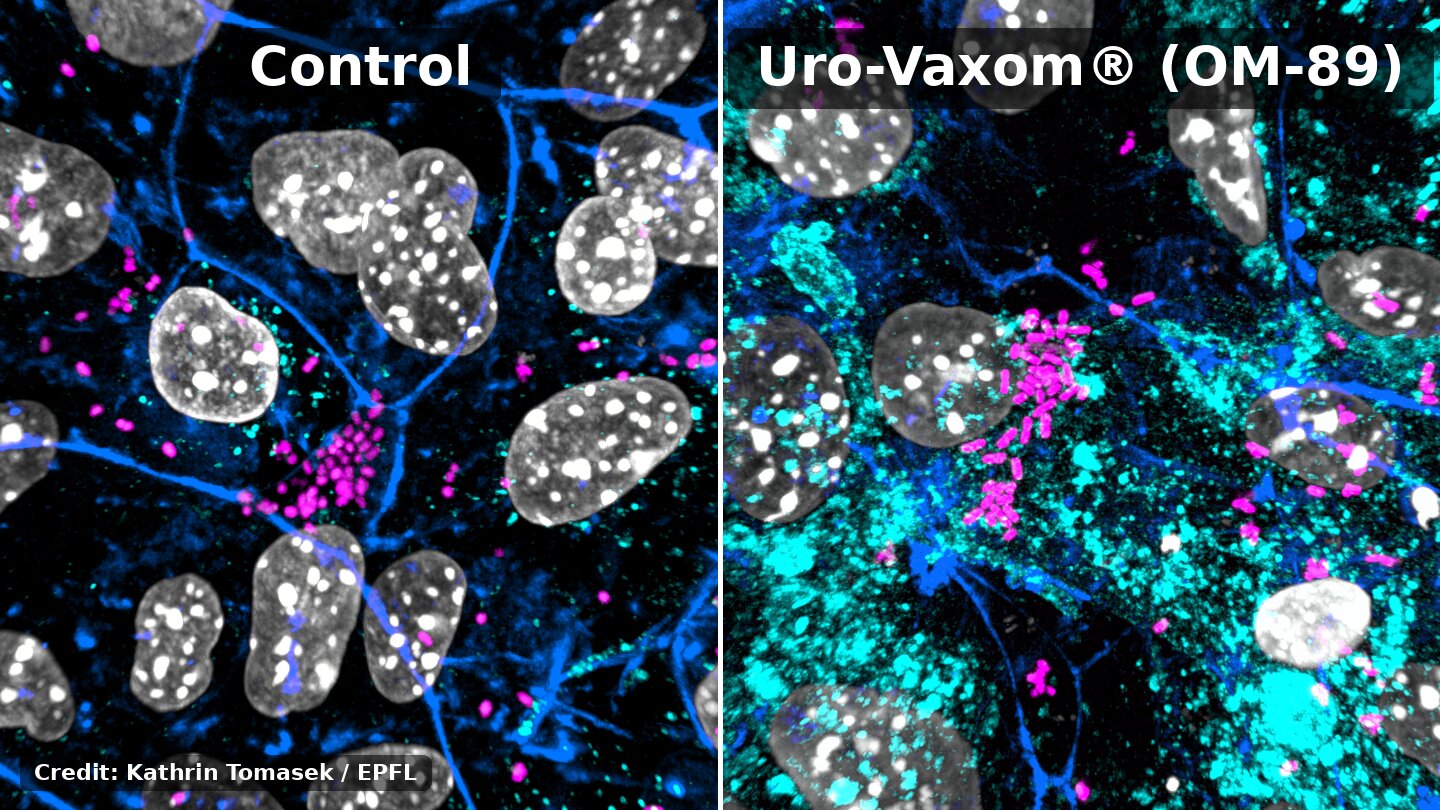
One reason is that the bacterium can enter cells in the bladder's lining (its "epithelium") and hide there, sheltered from both antibiotics and the patient's immune system. These bacteria can later multiply again and cause recurrent UTIs. Repeated antibiotic treatment can then foster antibiotic resistance.
Researchers led by Kathrin Tomasek and John McKinney at the Laboratory of Microbiology and Microtechnology at EPFL, with Christian Pasquali and Mario Romani from OM Pharma, have identified a way to strengthen bladder cells' ability to eliminate these hidden bacteria. Their study, published in PLOS Pathogens, shows that the drug OM-89, marketed as Uro-Vaxom, activates cellular degradation pathways in bladder epithelial cells while also increasing the amount of antibiotic that enters them.
OM-89 has been used for several decades to help prevent recurrent UTIs. It is mainly known for stimulating the immune system, but the new in vitro study reveals a second mechanism of action: a direct effect on the cells lining the bladder.
The researchers studied mouse and human bladder epithelial cells using organoid models and differentiated cell cultures. They exposed the cells to OM-89, infected them with different strains of uropathogenic E. coli and treated them with antibiotics.
Source link