This article has been reviewed according to Science X's editorial process and policies. Editors have highlighted the following attributes while ensuring the content's credibility:
For millions living with type 2 diabetes, heart disease remains one of the greatest threats to their health.
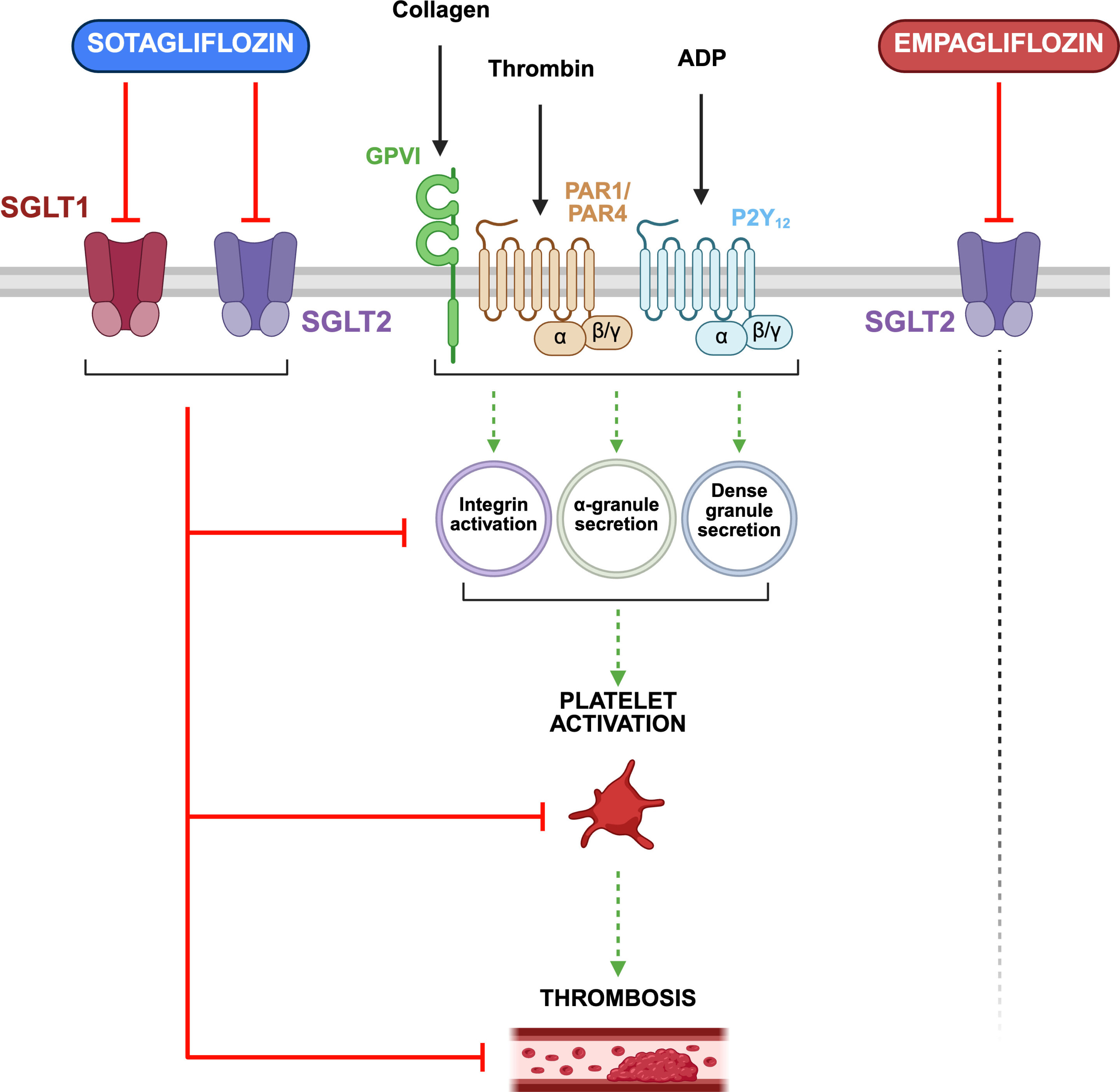
Researchers at Michigan Medicine have uncovered a mechanism that may explain why sotagliflozin, an FDA-approved diabetes medication marketed as Inpefa, reduces the risk of heart attack and stroke. In a series of laboratory experiments, the research team found that the drug helps prevent excessive platelet activation, a process that can lead to dangerous blood clots that block flow to the heart and brain.
The findings, published in the Journal of Clinical Investigation, provide new insight into cardiovascular benefits of the drug that extend beyond blood sugar control.
"A drug that can both decrease the risk for diabetes along with the risk for having a heart attack or stroke could be a turning point in our ability to safely treat this growing population in the U.S. and abroad," said Michael A. Holinstat, Ph.D., M.S., co-senior author and professor of pharmacology, internal medicine and surgery at the University of Michigan Medical School.
Sotagliflozin belongs to a class of medications known as sodium-glucose cotransporter (SGLT) inhibitors, which lower blood sugar by blocking the proteins responsible for glucose reabsorption. Unlike the widely used SGLT2 inhibitors, which primarily act in the kidneys, sotagliflozin targets both SGLT2 proteins in the kidneys and SGLT1 proteins in other organs.
Over the past decade, SGLT2 inhibitors such as empagliflozin (Jardiance) and dapagliflozin (Farxiga) have become a mainstay of type 2 diabetes treatment.
Source link