This article has been reviewed according to Science X's editorial process and policies. Editors have highlighted the following attributes while ensuring the content's credibility:
Disorders of the small intestine are often difficult to diagnose and treat. More than 20 feet (6.1 meters) long, an inch (2.5 centimeters) in diameter and located deep within the body, this organ is harder to access than other parts of the digestive tract, such as the colon or stomach.
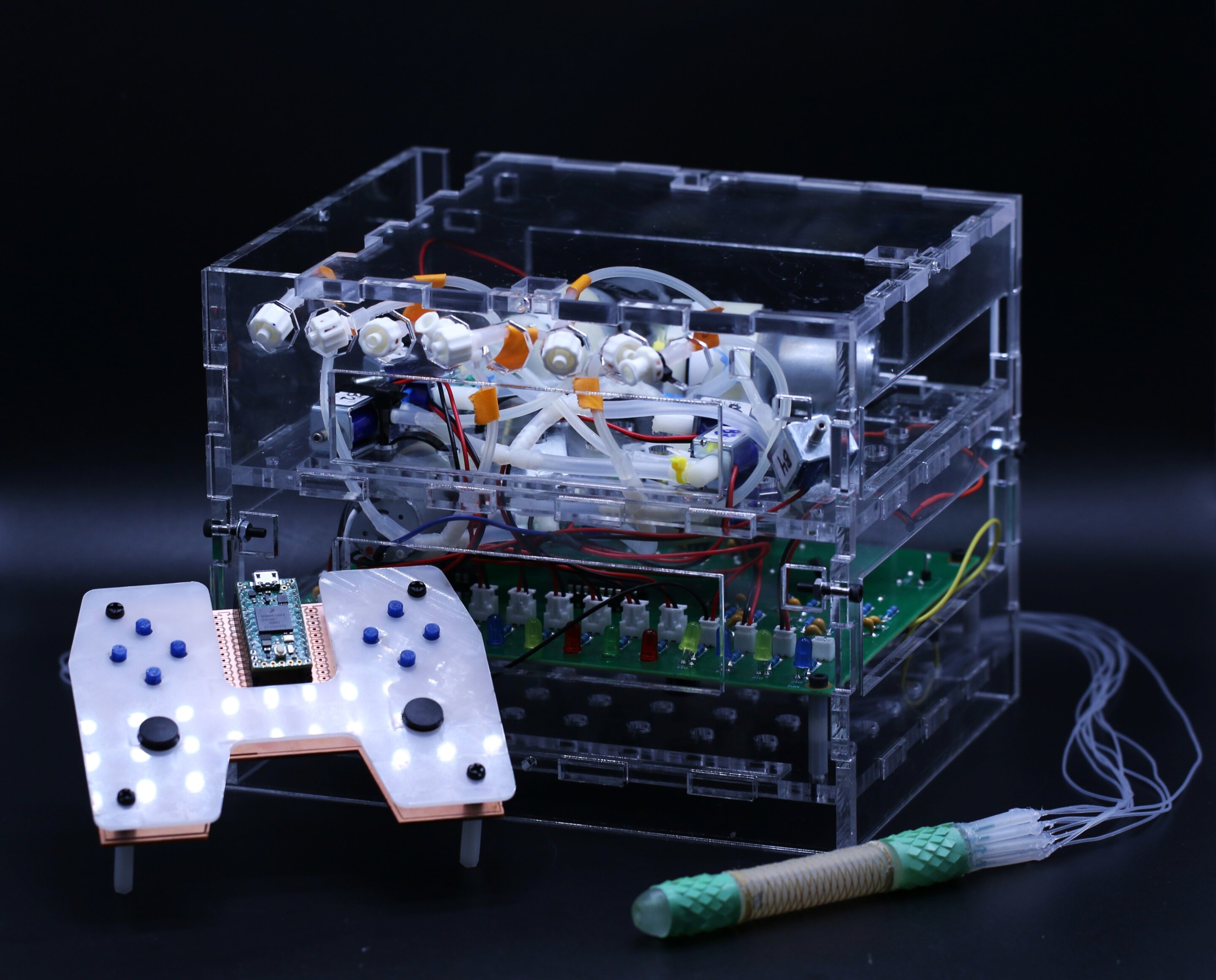
To overcome those challenges, MIT engineers have designed a new robotic enteroscope that can move easily through the narrow passage of the small intestine, allowing it to perform imaging, deliver drugs and remove small polyps or tissue samples for biopsy.
In designing the new robot, the researchers were inspired by the locomotion of snakes, as well as the scaly skin that helps them gain traction on slippery surfaces. A special textured coating helps the robot remain attached to the mucosal lining of the intestine as it inches its way through the narrow tube.
Similar to an endoscope, the robot contains a variety of tools to help detect and treat any abnormalities that it might encounter.
"When we evaluate the small intestine, we do it for either diagnosis or treatment. If we find a little polyp that needs to be removed, this robot allows us to take a biopsy or remove it," says Giovanni Traverso, professor of mechanical engineering at MIT, a gastroenterologist at Brigham and Women's Hospital and an associate member of the Broad Institute of MIT and Harvard.
Source link