This article has been reviewed according to Science X's editorial process and policies. Editors have highlighted the following attributes while ensuring the content's credibility:
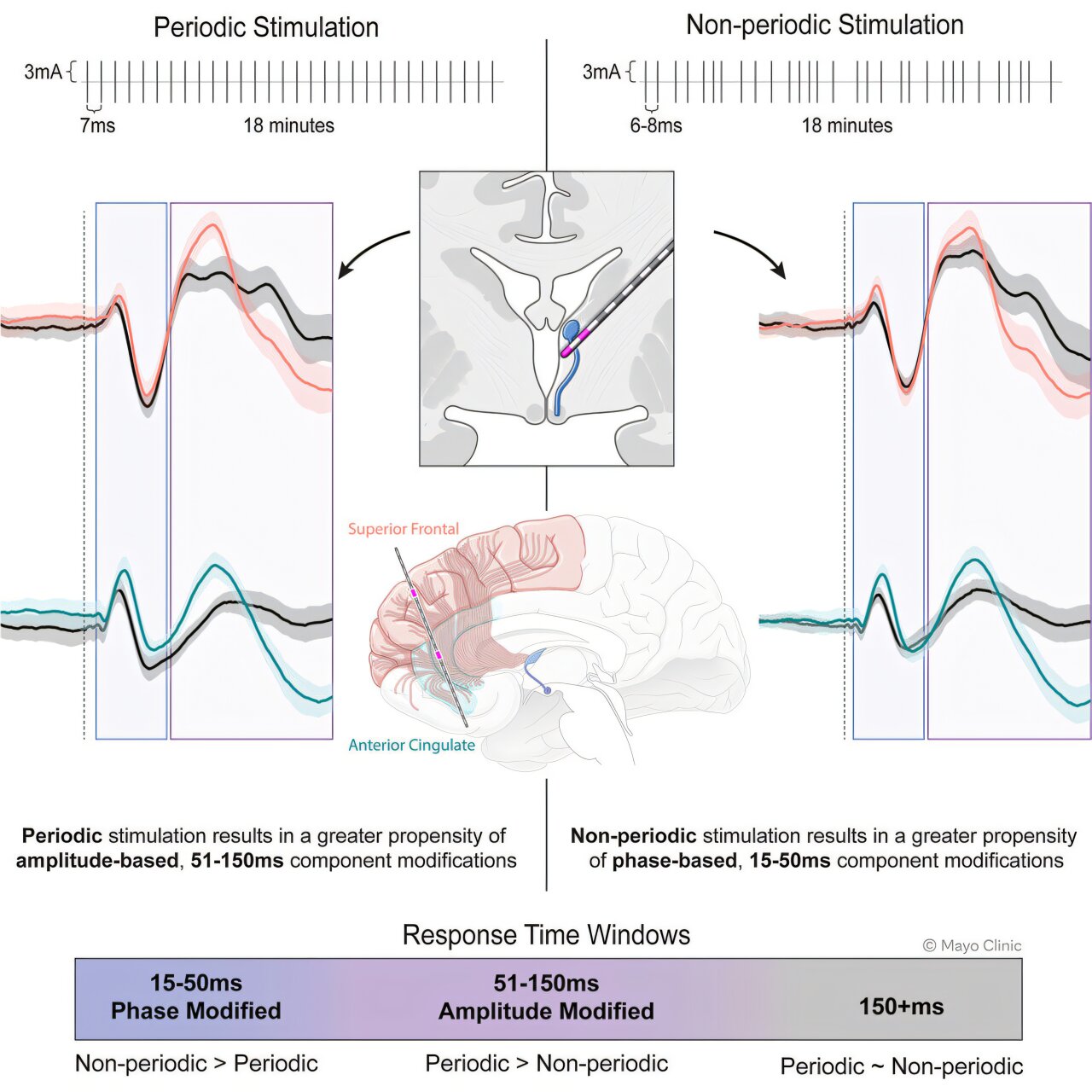
Mayo Clinic researchers have detected measurable changes in the brain within 18 minutes of deep brain stimulation (DBS) in people with drug-resistant epilepsy, a finding that could eventually help clinicians personalize treatment without waiting months to determine whether stimulation settings are effective. The study was recently published in iScience.
DBS is approved by the Food and Drug Administration as a therapy for certain patients with drug-resistant epilepsy. Electrical pulses delivered through electrodes implanted in the brain can help reduce seizures. But finding the most effective stimulation settings can require months or even years of adjustments.
"One of the biggest questions we have when we stimulate the brain with therapeutic devices is: Are these the right settings for the person sitting across from me?" says Jonathon Parker, M.D., Ph.D., a Mayo Clinic neurosurgeon in Arizona and senior author of the study. "Right now, we may have to wait months to see whether a patient's seizures improve. We're trying to find a brain signal that could eventually give us that information much earlier."
The study included nine adults with drug-resistant focal epilepsy who were undergoing intracranial electroencephalogram (EEG) monitoring at Mayo Clinic as part of their clinical care. Researchers examined how communication between the thalamus and other areas of the brain changed before and after short periods of stimulation.
They compared two stimulation patterns, which Parker likens to the difference between two drummers.
Source link