This article has been reviewed according to Science X's editorial process and policies. Editors have highlighted the following attributes while ensuring the content's credibility:
People with multiple sclerosis (MS) who are treated with rituximab have an increased risk of developing inflammatory bowel disease, particularly Crohn's disease, although the absolute risk remains low. This is according to the first large population-based study in the field, led by researchers at Karolinska Institutet and published in JAMA Neurology.
Rituximab belongs to a group of drugs known as anti-CD20 therapies and is currently the most used disease-modifying treatment for MS in Sweden. As the use of anti-CD20 therapies has increased, cases of inflammatory bowel disease have been reported among patients receiving these treatments, raising concerns among neurologists. Until now, however, evidence from large studies has been lacking. The new study is the first population-based study to systematically investigate the association.
The researchers analyzed nearly 14,000 treatment episodes among people with relapsing-remitting MS, using data from Swedish registers. They compared rituximab with three other highly effective MS treatments: natalizumab, dimethyl fumarate and fingolimod.
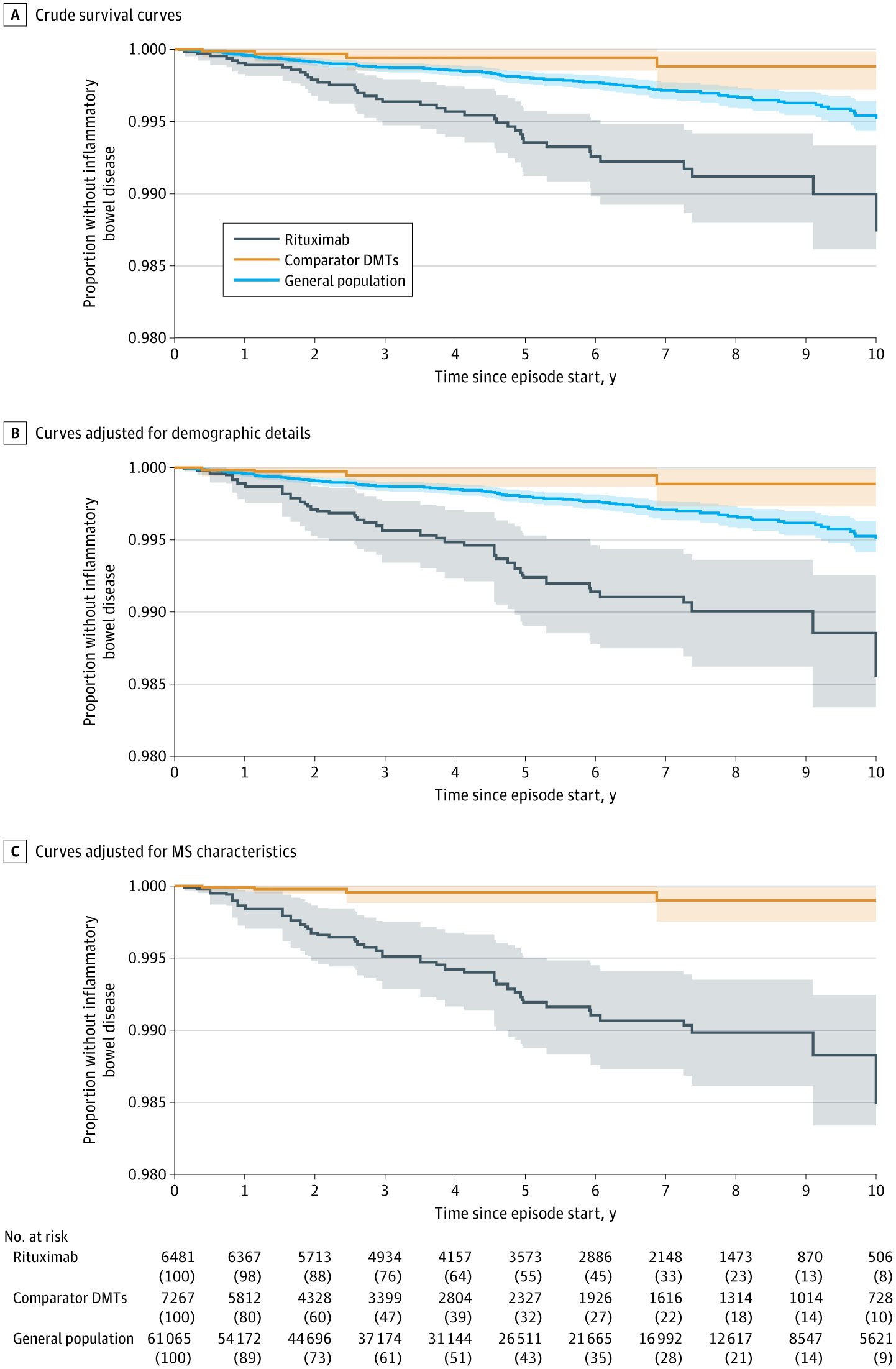
Inflammatory bowel disease was more common among people treated with rituximab than among those receiving any of the other three treatments, even after differences in follow-up time were taken into account. After adjusting for other differences between the groups, the researchers found that the risk was around 10 times higher with rituximab than with the other MS treatments.
Despite the increased relative risk, the absolute risk remained low. Fewer than 2% of patients in any of the treatment groups developed inflammatory bowel disease within 10 years of starting treatment.
Source link