This article has been reviewed according to Science X's editorial process and policies. Editors have highlighted the following attributes while ensuring the content's credibility:
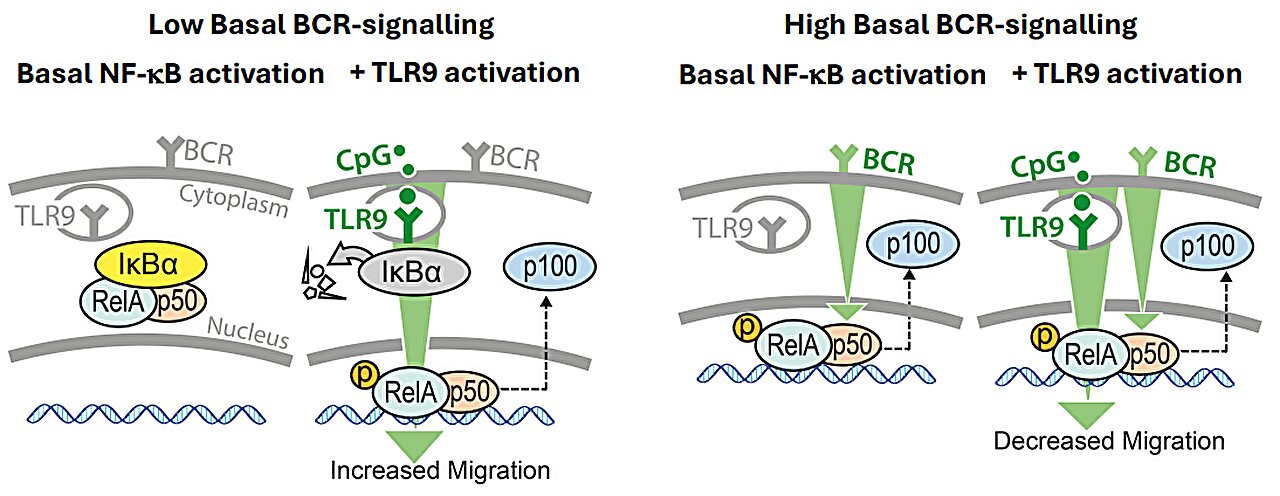
In a first-of-its-kind study collaboration, new research has uncovered that chronic lymphocytic leukemia (CLL) cells may switch between different survival signals, helping explain why treatments work well for some patients but stop working for others. These findings could ultimately help pave the way for more personalized treatment.
Simon Mitchell, a professor at the University of Sussex and a Leukemia UK John Goldman Fellow Follow-up Fund recipient, developed sophisticated computer models to predict how CLL cells from different patients would respond to signals that help them survive.
The research, led by Mitchell's collaborators professors Andrea Pepper and Chris Pepper and Dr. Kennedy and published in the journal Blood, could help scientists better understand why some patients respond particularly well to certain treatments while others develop drug resistance.
This is the first time a detailed computer model of B-cell receptor (BCR) signaling in CLL has been directly tested and supported using cells from patients.
CLL is the most common adult leukemia and remains incurable and a lifelong condition. Advances in therapies known as Bruton's tyrosine kinase inhibitors (BTKi) have significantly changed outcomes for patients over the years, but responses can vary.
These drugs disrupt an important communication system used by CLL cells called the B-cell receptor (BCR) pathway. This forces cancer cells out of protective areas such as the lymph nodes, where they "hide," and into the bloodstream, allowing them to be targeted more effectively.
Source link