This article has been reviewed according to Science X's editorial process and policies. Editors have highlighted the following attributes while ensuring the content's credibility:
Fox Chase Cancer Center researchers identified a potential therapeutic target for pancreatic cancer after showing that tumor growth can be slowed and immune suppression can be reduced in preclinical trials by blocking a particular protein, called anoctamin 6 (ANO6).
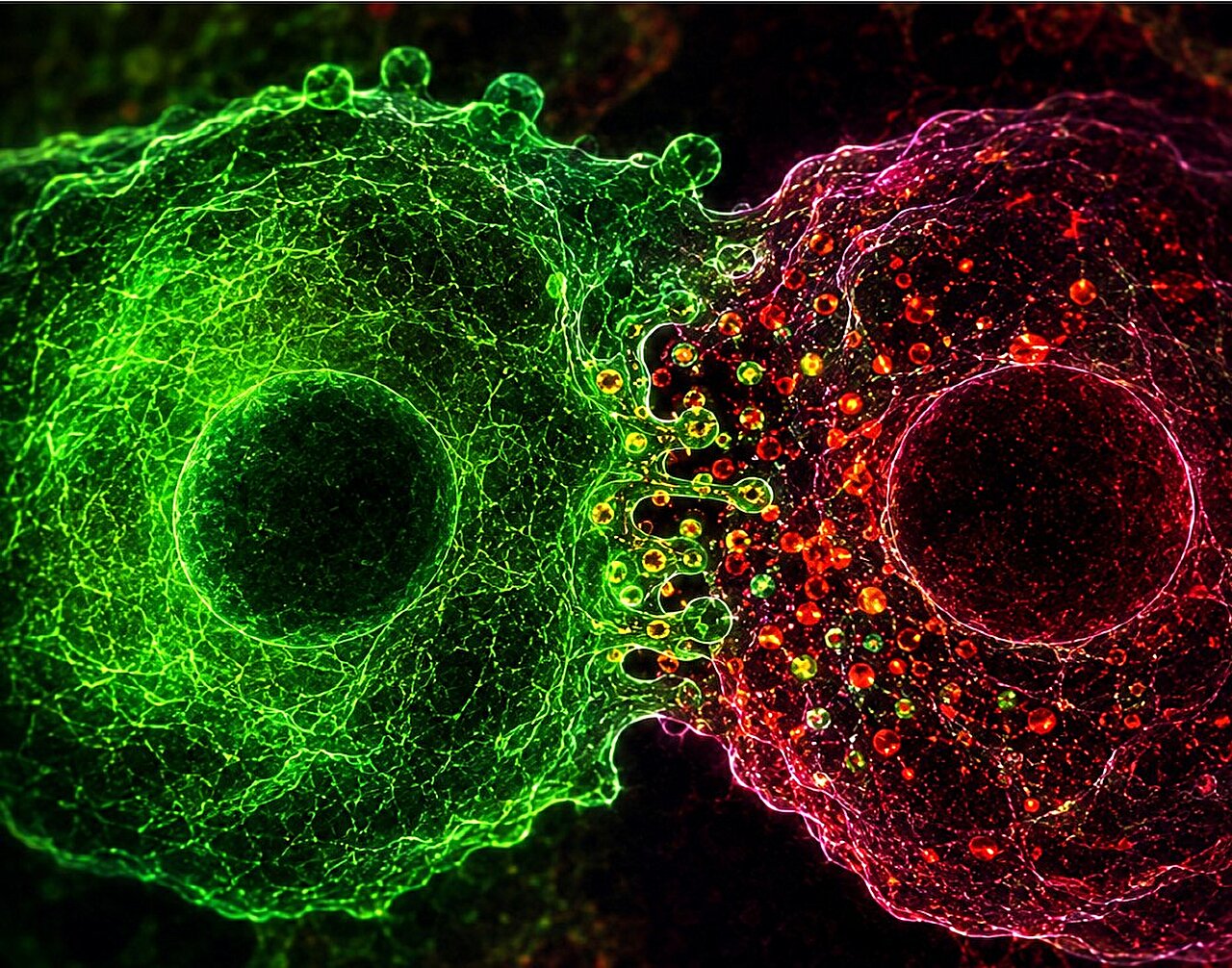
The study, published in Nature Cancer, found that ANO6 helps pancreatic cancer cells obtain nutrients from surrounding cells while suppressing the immune system's ability to fight tumors. ANO6 enables cancer-associated fibroblasts (CAFs)—cells that make up much of the dense tissue surrounding pancreatic tumors—to transfer cholesterol and other lipids to cancer cells.
"These findings help explain how pancreatic cancer cells obtain essential nutrients despite the unusual structure of the pancreatic tumor microenvironment," said Igor Astsaturov, M.D., Ph.D., a professor at Fox Chase and co-senior author of the study. "Cancer-associated fibroblasts are not passive bystanders. They actively support tumor growth by transferring lipids to cancer cells."
Pancreatic ductal adenocarcinoma (PDAC), the most common type of pancreatic cancer, is surrounded by dense connective tissue and has relatively few functional blood vessels as these collapse due to the expansion of CAFs and their self-generated collagenous fibers acting as a functional unit. How cancer cells obtain nutrients such as cholesterol in this environment has remained unclear.
, professor and co-leader of the Cancer Signaling and Microenvironment Program at Fox Chase and co-senior author of the study.
Source link