This article has been reviewed according to Science X's editorial process and policies. Editors have highlighted the following attributes while ensuring the content's credibility:
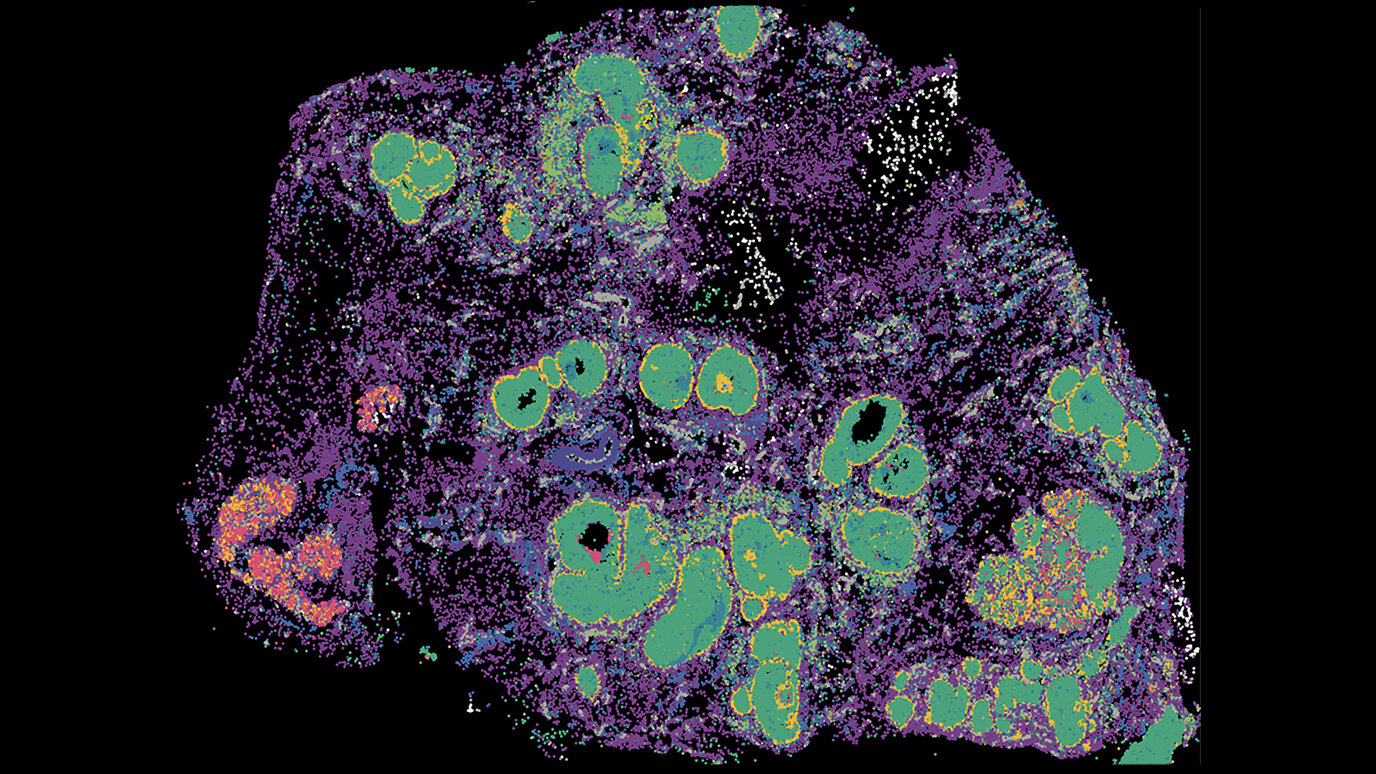
Researchers at The University of Texas MD Anderson Cancer Center have created one of the most detailed maps to date of the cell environment surrounding ductal carcinoma in situ (DCIS), the most common form of preinvasive, or stage 0, breast cancer. The findings may help explain why some lesions progress to invasive breast cancer and others do not, informing strategies to improve patient risk prediction and develop better targeted approaches for patients at higher risk of invasive disease.
The study, published in Science, was co-led by Nicholas Navin, Ph.D., chair of Systems Biology, and Savitri Krishnamurthy, M.D., professor of Anatomical Pathology, as well as co-first authors Siyuan He, Ph.D., and Aatish Thennavan, Ph.D., postdoctoral fellows of Systems Biology.
"DCIS is considered a snapshot before breast cancer becomes invasive, but not all DCIS cases progress to invasive disease, and the biology surrounding these lesions has been challenging to examine," Navin said.
"This atlas reveals the surrounding cells and structures that may help disease become invasive. In the future, these findings may allow clinicians to better identify and treat patients with DCIS who are at higher risk of invasive progression while also avoiding unnecessary treatments for those at low risk."
DCIS occurs when abnormal cells grow inside the breast milk ducts but have not yet spread into surrounding tissue. It is considered to be a precursor to the most common type of breast cancer.
Source link