This article has been reviewed according to Science X's editorial process and policies. Editors have highlighted the following attributes while ensuring the content's credibility:
In Ewing sarcoma, an abnormal protein formed by the fusion of two genes can activate repetitive DNA regions that normally remain silenced and turn them into gene regulatory elements. This mechanism contributes significantly to the development of this tumor and is one of its best-studied molecular hallmarks.
A team led by Dr. Cayetano González, research professor (emeritus) at IRB Barcelona and ICREA, in collaboration with Dr. Jaume Mora, from the Pediatric Cancer Center Barcelona at Hospital Sant Joan de Déu, has described how this type of activation can occur without the involved proteins being fused. The study, conducted in the fruit fly Drosophila melanogaster, identifies collaboration between two proteins as a key requirement to activate these DNA regions. The work is published in the journal G3: Genes, Genomes, Genetics.
Previous studies had observed that proteins from the ETS family can also activate these sequences—known as GGAA microsatellites—in prostate cancer and B-cell acute lymphoblastic leukemia. However, the mechanism by which they achieved this without being part of a fusion protein remained unclear.
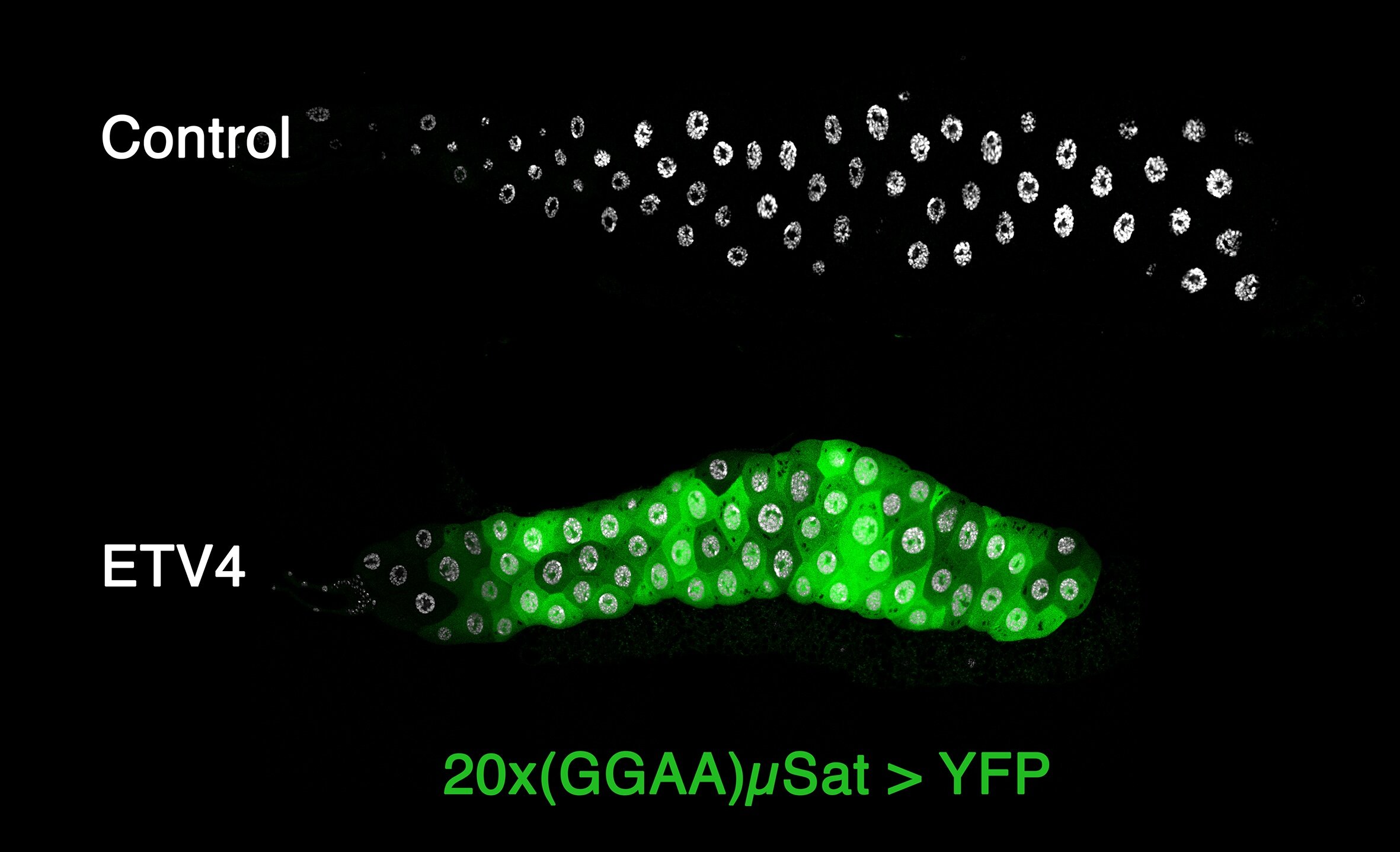
To study this process, the team introduced different human cancer-related ETS proteins into Drosophila. One of them, ETV4, previously implicated in prostate cancer, robustly activated GGAA microsatellites in specific fly tissues.
"The fact that this mechanism also works in the fly indicates that it has been conserved across a vast evolutionary distance and reinforces the potential relevance of the abnormal activation of these DNA regions in tumors beyond Ewing sarcoma," explains González.
Source link