This article has been reviewed according to Science X's editorial process and policies. Editors have highlighted the following attributes while ensuring the content's credibility:
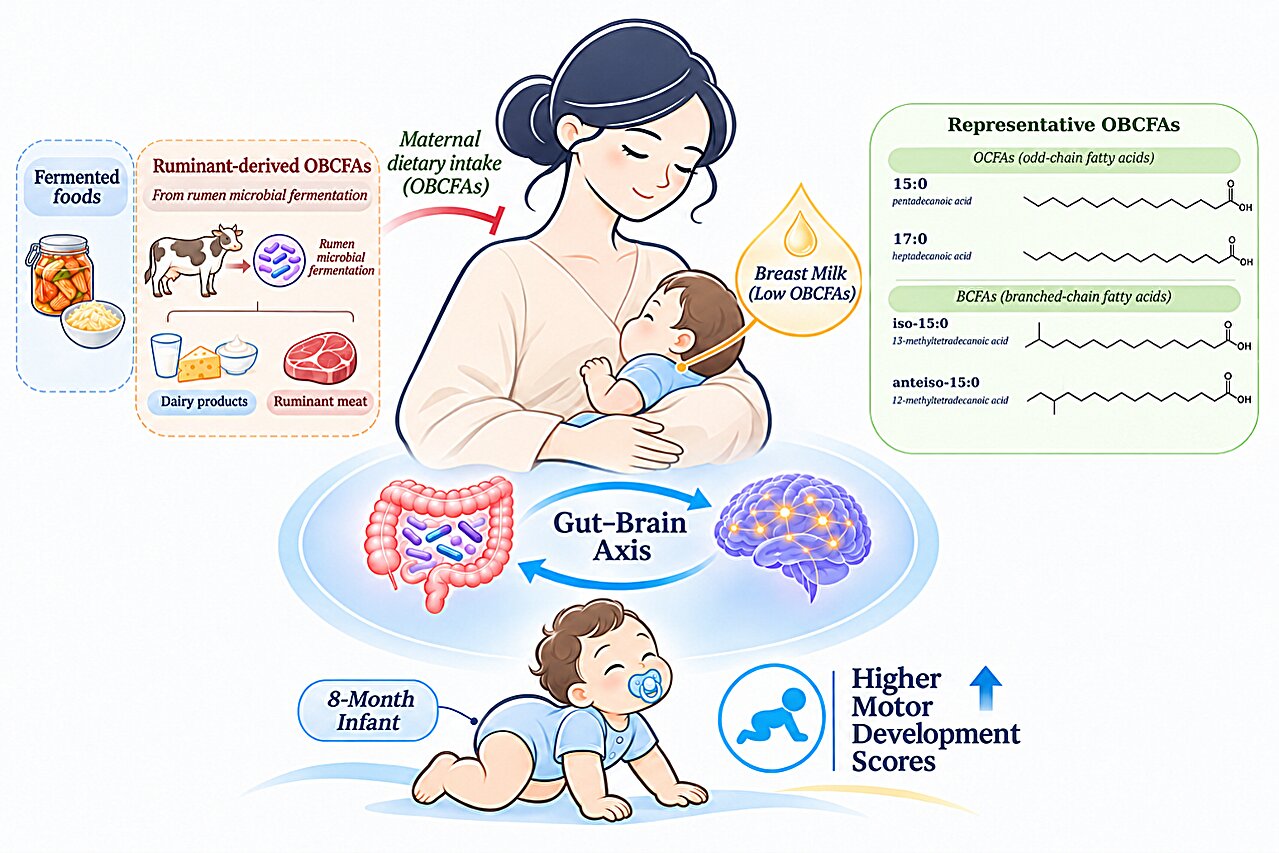
A new study has found an association between odd- and branched-chain fatty acid (OBCFA) levels in breast milk and infant motor development, providing new population-based evidence for research on early-life nutrition and neurodevelopment.
The study, published in European Journal of Nutrition on Oct. 31, was conducted by a research team led by professor Gao Ying at the Shanghai Institute of Nutrition and Health (SINH) of the Chinese Academy of Sciences.
OBCFAs, including fatty acids such as C15:0, C17:0, iso-C15:0 and anteiso-C15:0, are microbial metabolites. Their main dietary sources are dairy products and ruminant meat, as well as fermented plant-based foods; they have previously been regarded as biomarkers of dairy intake.
Existing studies suggest that OBCFAs may influence brain health through the "microbiota–gut–brain axis," but population-level evidence on the relationship between OBCFAs in breast milk and infant neurodevelopment remains limited.
Based on a prospective mother-infant cohort established in the Beijing area, the research team followed up with 120 mother-infant pairs, collecting breast milk samples at 42 days and 8 months postpartum. Fatty acid composition was quantitatively analyzed using gas chromatography–mass spectrometry (GC-MS), and infants' cognitive and motor development at 8 months of age was assessed using the internationally recognized Bayley Scales of Infant and Toddler Development (Third Edition).
The study found that higher levels of odd-chain fatty acids (C15:0, C17:0) and total OBCFAs in breast milk at both 42 days and 8 months postpartum were associated with lower motor development scores in infants.
Source link