This article has been reviewed according to Science X's editorial process and policies. Editors have highlighted the following attributes while ensuring the content's credibility:
A light brush, a hot surface and an irritating itch all activate different sensory pathways, yet researchers have determined that, in mice, these otherwise distinct responses share a molecular helper. A team led by Bailong Xiao at Tsinghua University found that removing the protein CRELD1 weakened the animals' reactions to touch, heat, cold, painful pressure and itch. But how can one protein influence so many different sensations?
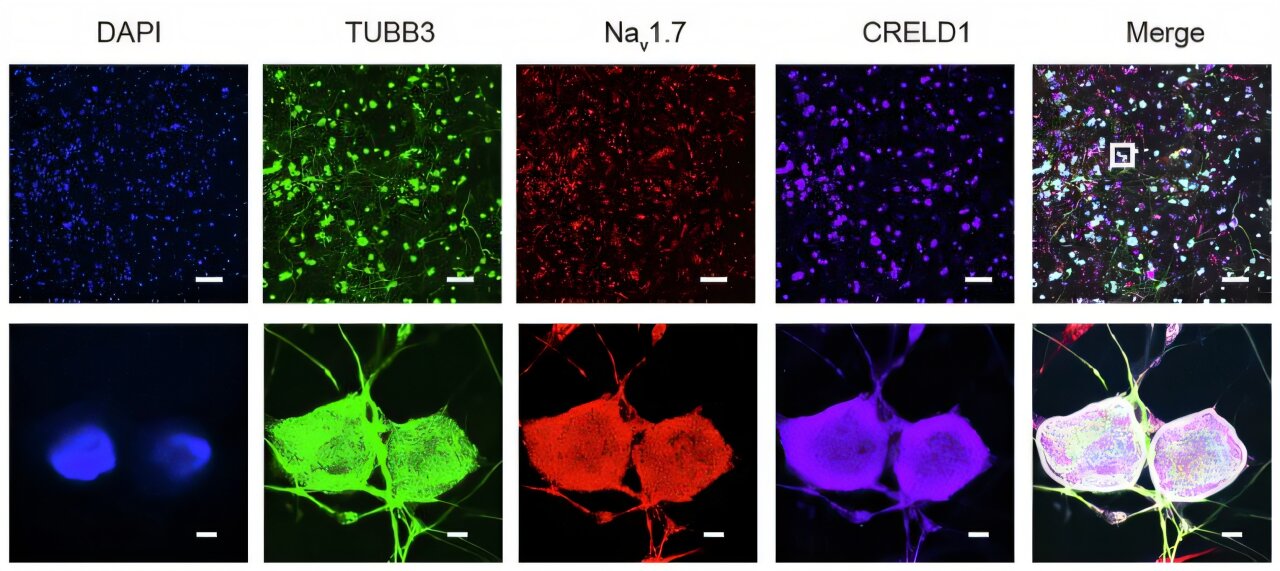
The team's article, published in Nature Neuroscience, shows that CRELD1 is a broad regulator of sensory responses, supporting sodium-channel activity that helps neurons generate the electrical impulses that carry information onward after a stimulus has been detected.
To identify the genes involved in sensation, the researchers used CRISPR to disable selected genes in newborn mice, then tested the animals as they grew. After validating their method against genes with established sensory roles, the team screened 20 candidates. One, Creld1, stood out for the breadth of its effects.
Mice with the disrupted gene withdrew their paws less often when touched with fine filaments or a soft brush. They also responded less strongly to painful mechanical stimulation and took longer to react to hot and cold surfaces.
To make sure these changes came from sensory neurons, the researchers used a second genetic method to delete Creld1 specifically in neurons clustered beside the spinal cord. The mice showed similar deficits.
Source link