Early gaming PCs were far less powerful than today's machines, but they laid the foundation for modern gaming hardware. Players relied on basic processors, limited memory, and simple graphics. As games became more detailed, hardware makers started developing better components, slowly turning personal computers into serious gaming machines.
The arrival of dedicated graphics cards changed PC gaming forever. Instead of relying only on the processor, computers could now handle complex visuals more efficiently. Better GPUs brought sharper textures, smoother frame rates, and richer game worlds, helping developers create experiences that pushed hardware capabilities with every new generation.
Processors became another major part of the gaming hardware race. Faster CPUs allowed games to handle larger worlds, smarter enemies, physics, and more detailed gameplay. Multi-core processors later improved performance further, giving gamers the power needed to run demanding games while handling streaming, recording, and other tasks at once.
Storage also went through a major transformation. Traditional hard drives were eventually joined by much faster SSDs, reducing loading times and making large game installations easier to manage. Modern NVMe SSDs can deliver even faster data access, helping games load detailed environments and assets quickly during gameplay.
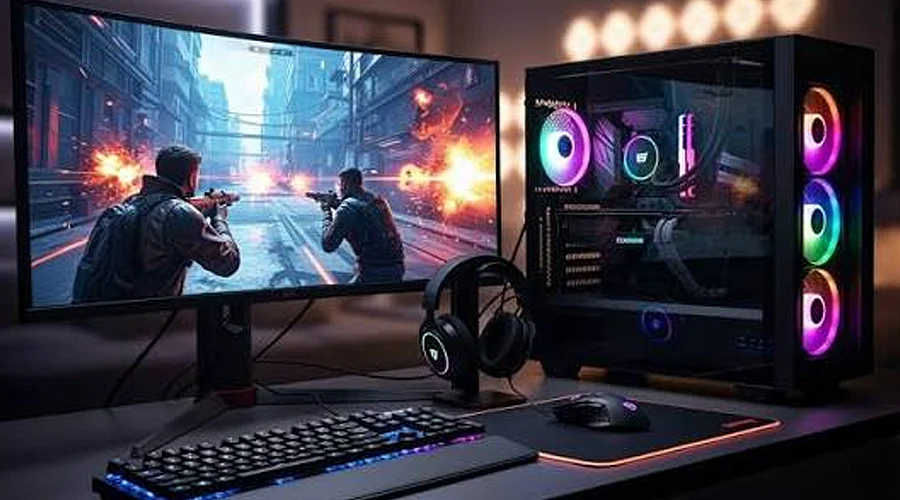
As gaming components became more powerful, controlling heat became increasingly important. Large air coolers, case fans, and liquid cooling systems helped gaming PCs maintain stable temperatures during demanding sessions. Better airflow and cooling also allowed enthusiasts to push their hardware harder while building increasingly powerful and customized machines.
Gaming PCs gradually became highly customizable machines. Players could select individual CPUs, graphics cards, memory kits, storage drives, power supplies, and cooling systems based on their needs.
Source link