
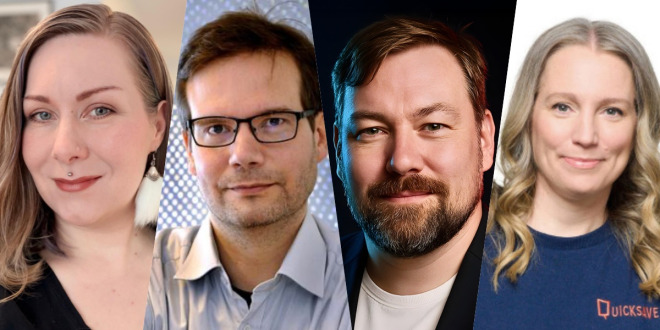
At Pocket Gamer Connects Nordics in Helsinki on October 20th to 21st, the panel “Making Games Then & Now: 25 Years Of Changing Practices” will revisit the turning points that shaped game development from the 2000s to the 2020s. Some are global, some distinctly Nordic, and others are deeply personal.
Ahead of the event, we asked some of our panellists what has changed most since they started out, which old instincts still hold and what the next era of development might bring.
For Jaakko Kemppainen, a lecturer in the department of art and media at Aalto University, the biggest gap is education. “Back in early 2000s there were no schools for making games,” he says. There were a couple of game design books his team didn’t know about, plus programming manuals. Through cultural studies at university, he found the early game theorists: Huizinga, Caillois and Suits.
“Things were much simpler, but we also lacked guidance and mentors,” he recalls. The upside was an open market. There were no digital storefronts yet, and mobile meant small Java games. “There was a lot of space for opportunistic experimentation.” His team made TV games that players controlled by texting from button phones, learning the casual market, technical limits and production pipelines on the fly.
” Some want to make personal, artistic games or recreate childhood favourites. Others are focused on monetisation trends. “There is a market for every game, but reaching the audience is the big question,” he says.
Source link