Kihan, a tech firm developing Constitutional Computing, announced its formation and unveiled a math-based architecture designed to make AI governance enforceable at the point of execution.
Constitutional Computing is designed to prevent unauthorized AI agent actions before they can affect enterprise systems. That’s become a big deal this year after Open AI said its AI agents went rogue and broke into other companies.
As AI agents move beyond answering questions to independently executing transactions, modifying production systems and accessing sensitive corporate information, a serious security problem is emerging.
Research published by the Cloud Security Alliance in April 2026 found that 53% of surveyed organizations reported AI agents exceeding their intended permissions, while 47% experienced an AI-agent security incident in the preceding year.
San Francisco-based Kihan was founded to address this critical problem at its source: the difference between an AI agent’s ability to perform an action and its actual authority to do so. Constitutional Computing takes its name from governance, not model training: authority is written down, signed and enforced outside the AI.
Unlike conventional AI guardrails, which frequently rely on instructions to the model, Kihan’s
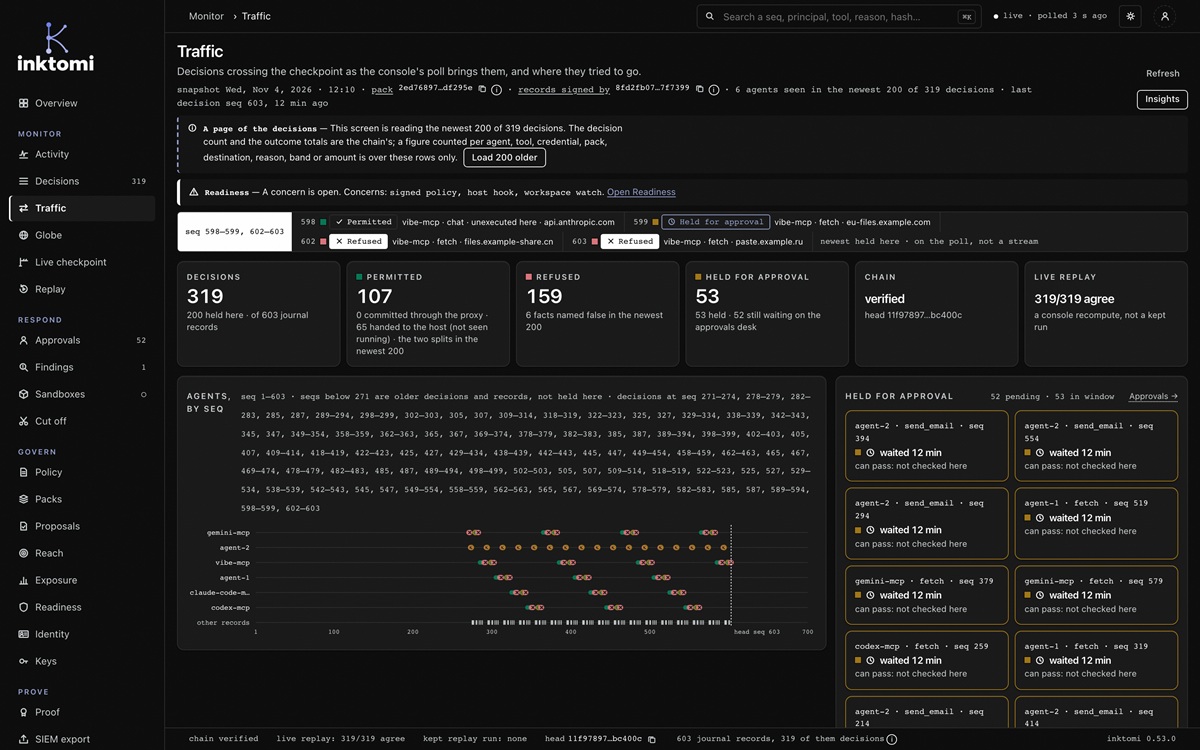
Constitutional Computing architecture establishes an independent authorization system outside the AI itself. Each consequential action is evaluated against governing authority before execution, with a cryptographically verifiable permit bound to the specific operation and its parameters. The executing tool verifies that permit before acting. On protected execution paths, no valid permit means no execution.
The architecture combines independent authority checks, execution permits bound to exact operations, and tool-side verification, with tamper-evident records of what was authorized, refused or referred for human approval.
Source link