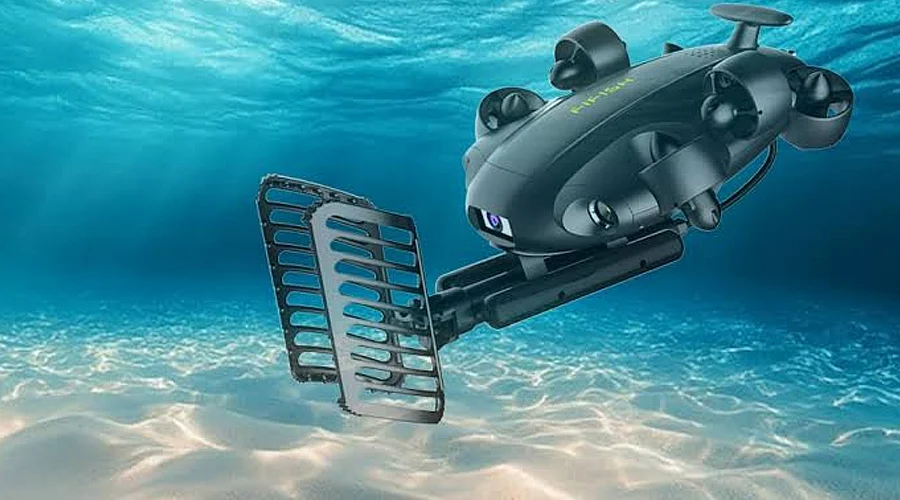
Ocean Drones Expand Marine Research: Ocean-monitoring drones are giving researchers new ways to study vast and difficult-to-reach marine environments. These autonomous systems can travel across oceans, collect measurements and transmit information without requiring scientists to remain at sea. Their ability to operate for extended periods is helping researchers gather more frequent data on temperature, salinity, currents, marine organisms and other ocean conditions.
Tracking Ocean Conditions: Researchers use autonomous drones to monitor important physical properties of seawater. Sensors can measure temperature, salinity, pressure and other environmental conditions as drones move through different areas. Repeated measurements help scientists identify changes over time and understand ocean circulation. This information can contribute to research on climate patterns, marine ecosystems and changing conditions beneath the ocean surface.
Monitoring Marine Life: Drones can also support research into marine animals and their habitats. Equipped with cameras, acoustic sensors and other instruments, these systems can collect information without requiring constant human presence. Researchers can use the data to study animal movements, population patterns and habitat conditions. In some cases, quieter autonomous systems can reduce disturbances associated with conventional research vessels.
Detecting Pollution: Ocean-monitoring drones can help researchers identify and track pollution across marine environments. Sensors and imaging equipment may detect changes in water quality, chemical conditions or visible contamination. Autonomous platforms can repeatedly survey affected areas, helping researchers understand how pollutants spread and change. Such information can support environmental monitoring and improve understanding of pollution sources and their effects.
Studying Climate Change: The oceans play an important role in Earth's climate system, making long-term monitoring essential.
Source link