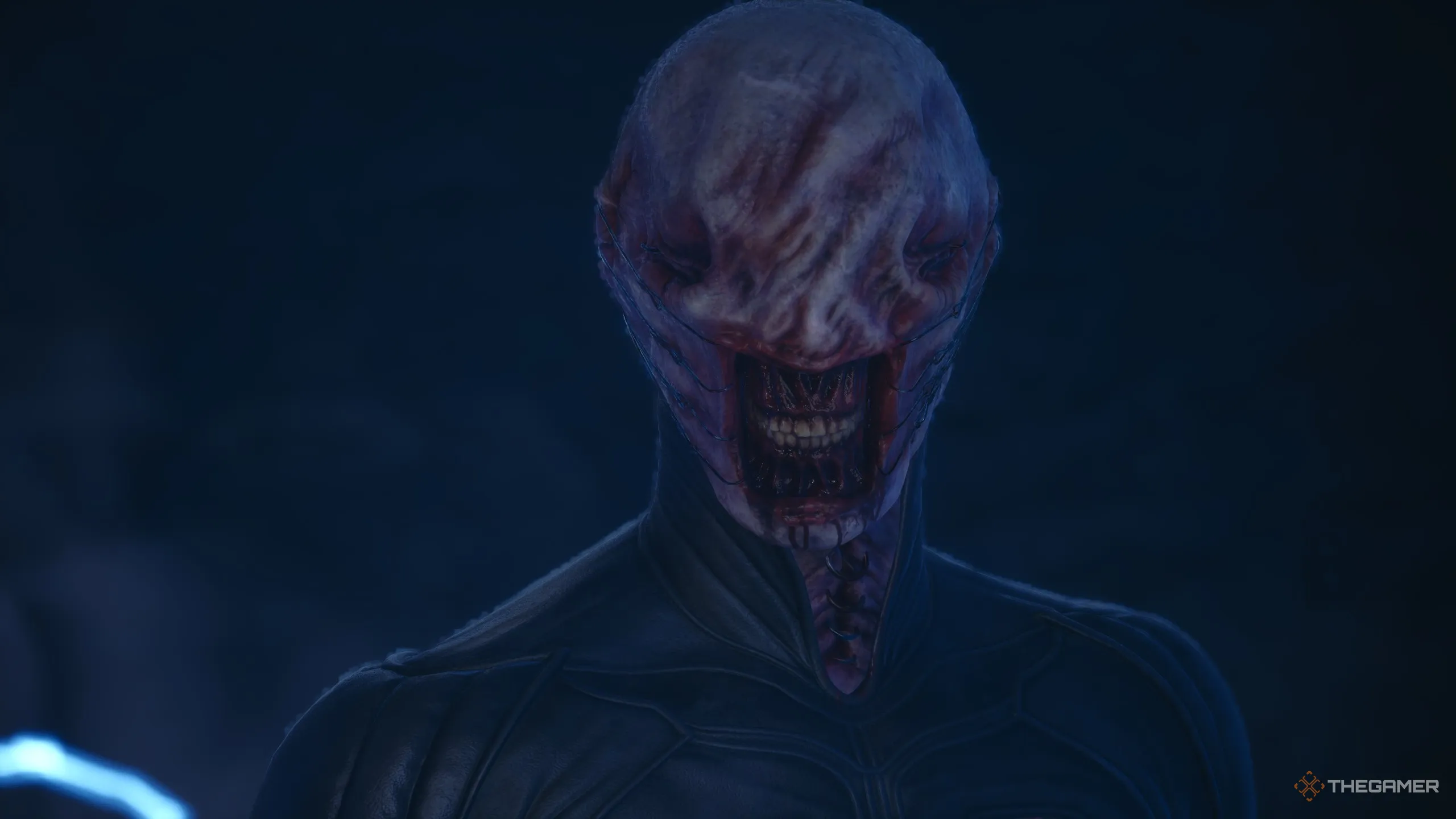
The Hellraiser franchise has always balanced on a razor’s edge between sensuality and suffering, between the allure of forbidden pleasure and the terror of what happens when trapped by desire. The first video game of the series’, Clive Barker’s Hellraiser: Revival, steps confidently upon the same line, but after finishing both endings, I found myself left unsatisfied.
Unfortunately, there’s a myriad of design problems that were difficult to ignore. Mandatory stealth sequences made sure my progress took longer, wonky melee combat resulted in me having to redo combat scenarios with too little resources, and bugs at numerous points halted my progress without me completely turning off the game.
So while Clive Barker’s Hellraiser: Revival reaches for the operatic cruelty of Hellraiser 1 and 2, yet lands closer to the loud, chaotic excess of Hellraiser 3 and 4. It has flashes of brilliance, especially in environmental design and surreal geometry, but the emotional core doesn’t manifest. What should have been an intimate descent into horror, is instead a tour through a world that is performative about the flesh than fails to be profound about its own spirit.
Lead characters Sunny and Aiden are meant to anchor the narrative, their relationship positioned as a tragic spiral that draws the attention of the Cenobites. In theory, this should work. Hellraiser has always thrived on flawed people inflicting self-destruction. The problem is that the game never gives Sunny and Aiden enough substance to feel like a real couple. Their interactions are thin, their emotional beats rushed, and their shared history barely present beyond a few superficial flashbacks.
Source link