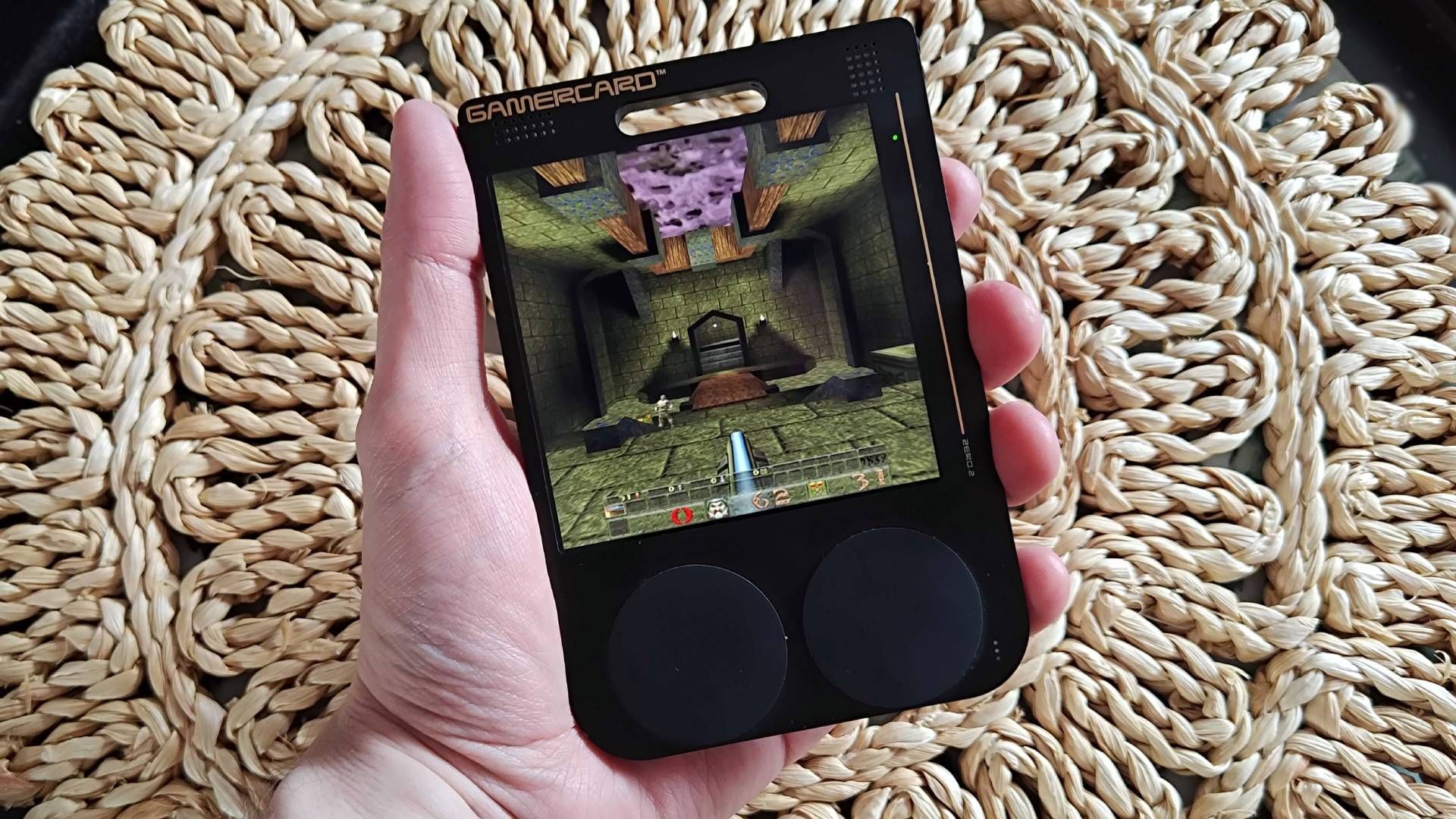
I’ve tested enough handhelds at this stage to know most device makers like to play it safe. The Gamercard isn’t remotely one of those handhelds, and that’s hardly surprising considering it shares a lineage with the very man who pioneered the microcomputer that arguably kicked off a whole gaming industry in the UK. That inventor is none other than the legendary Sir Clive Sinclair of ZX Spectrum fame, and his nephew, Grant Sinclair, is carrying the mantle within the portable console space.
Objectively speaking, the Gamecard doesn’t trade blows with the best gaming handhelds out there. I almost feel like that’s intentional by design, as comparing it to the majority of emulation devices and consoles out there effectively feels the same to placing the ZX Spectrum next to other microcomputers like the Commodore 64 and the MSX. By that, I mean there are elements of the Gamercard that absolutely put it at a disadvantage, and while that will be an automatic turn-off for some, I’m drawn in by this gadget’s odd design choices and inherent limitations.
Starting at £99 , the Gamercard feels very much like the same genre of handheld as the Playdate . Yes, I could slate it for its strange rubber pads, aversion to any sort of ergonomics, and odd-shaped screen, just like you could dunk on Panic for releasing something with a monochrome, non-backlit screen in 2022. Doing that completely overlooks the beauty of making a unique platform where indie games and tinkering can flourish, though, and if I’m being real, I’d take that over a conventionally “good” portable any day.
Source link