
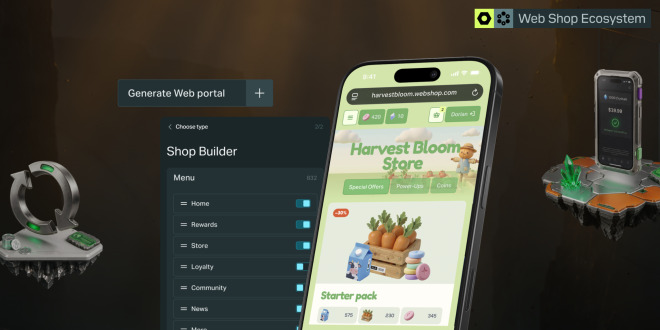
Whether direct-to-consumer works is no longer the question developers are asking, with web shops often being the entry point. What matters more now is how much of the opportunity a studio actually captures once the store is live.
Many assume that growing beyond the storefront means a big investment, such as more tools to buy, vendors to manage and more time from a team that has none to spare. But in practice that's rarely the case. To win the next stage of D2C, studios will need to build an ecosystem around their web shop, working across three layers that each do a different job:
Monetisation covers the tools that make it easy to capture payments across every player segment.
Engagement turns player engagement into revenue opportunities by giving them reasons to come back, spend more and bring their friends.
Operations keep the other two running, letting a studio plan, launch and measure the whole thing day to day from one place.
Together, these three layers help studios build a more sustainable D2C strategy that grows revenue while strengthening direct relationships with players.
A great web shop shows its value the moment a player lands on it, whether or not they came to spend, and gives those who did arrive intending to buy somewhere to spend more. But many studios don't know there's room to grow way beyond that, to drive new paying users, encourage repeat buyers and increase LTV.
That’s where ecosystem layers come in, because each one reaches players the storefront never would on its own.
Source link