How much control does a bank really have over the AI it uses?
Let’s picture a relationship manager reviewing a credit memo drafted by an agent.
Before relying on it, the banker first needs to know which customer records informed the assessment and whether the agent used the current lending policy.
And once other departments start building their own agents, keeping track of them becomes a job in itself.
As adoption spreads, teams may duplicate work, rely on different policy versions and struggle to track costs across departments.
Managing that work across departments is part of what Huawei aims to address with its Fintelligent AI Solution, which provides a shared foundation for developing and operating agents.
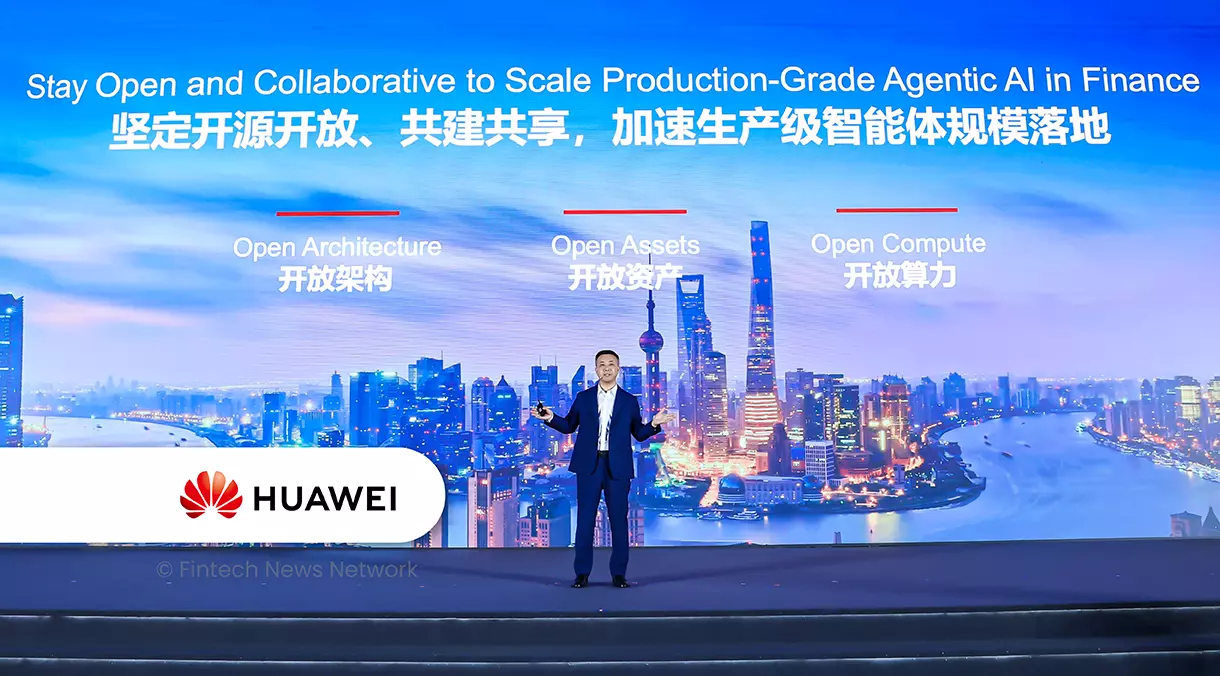
Huawei launched the solution at the Global Finance Summit during HUAWEI CONNECT 2026 in Shanghai on 18 September 2026.
Jason Cao, CEO of Huawei Digital Finance BU, presented Fintelligent as a way for banks to retain control over how they develop and use AI, explaining the thinking behind it in the company’s launch announcement.
“Every financial institution should own its AI and keep the choice and evolution of AI in its own hands.”
For a bank, this means retaining meaningful choice over its AI architecture and models, building reusable knowledge and agent assets, and maintaining the ability to operate and improve them over time.
Huawei’s approach includes making the agents and knowledge developed within a bank available for other teams to reuse.
Fintelligent connects these capabilities through an open hybrid AI architecture and three factories: Agent Factory, Token Factory and Data-Knowledge Factory.
Source link