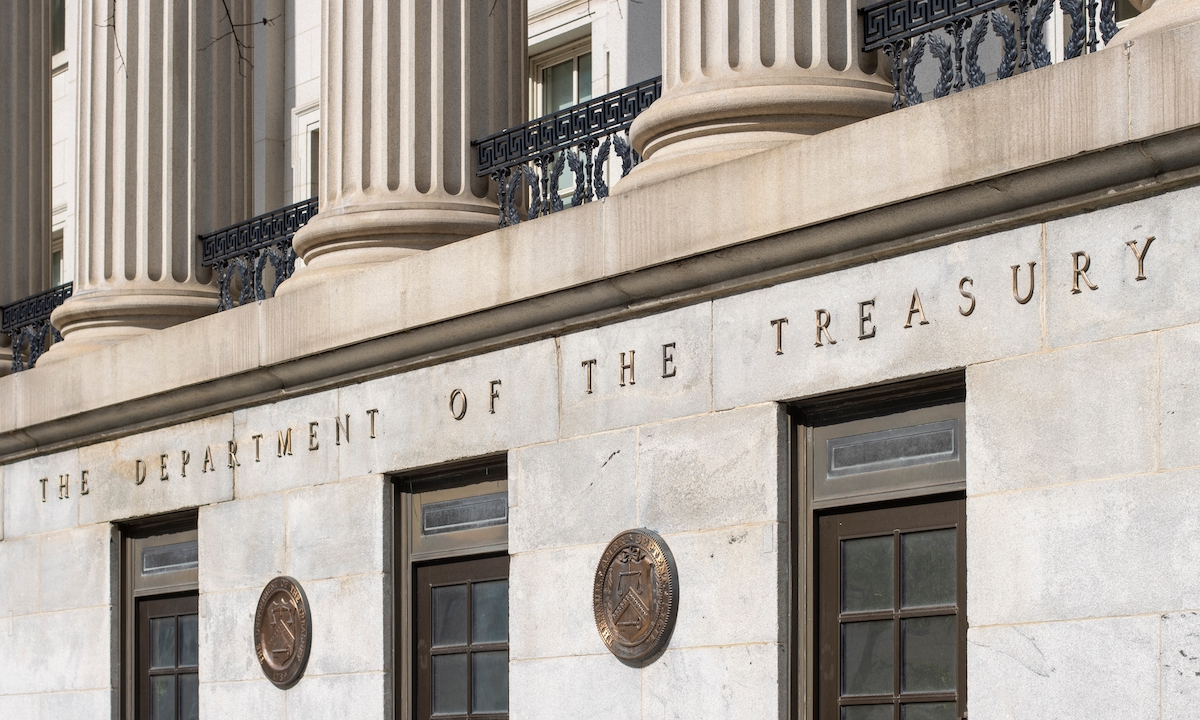
Treasury’s proposed rule would define when stablecoin issuance occurs in the United States and apply restrictions to U.S. distribution of payment stablecoins.
Banks want stronger protections against foreign or unlicensed issuers reaching U.S. customers through intermediaries.
Comment letters urge Treasury to distinguish regulated stablecoin activity from the technology and compliance services that support it.
Treasury’s effort to regulate payment stablecoins hinges on questions on when a coin has actually been issued, who issued it and how a stablecoin created outside the country can legally reach a customer in the United States.
Complete the form to unlock this article and enjoy unlimited free access to all PYMNTS content — no additional logins required.
The department’s proposed rule, published Aug. 18, would implement statutory restrictions on issuing payment stablecoins in the United States and on digital asset service providers offering or selling them to people here. The GENIUS Act also gives Section 3 extraterritorial effect when conduct involves an offer or sale to a person located in the United States.
The proposal addresses when an issuance occurs, the location of an issuer and recipient, foreign issued stablecoins, digital asset service providers and knowing participation in an unlawful issuance.
Letters issued during the commentary period, which closed on Monday (Oct. 19), offer a glimpse into what banks and other players want to see from Treasury. The repository of letters is available here.
ANB Bank wants Treasury to look at the functions behind a stablecoin when determining who qualifies as its issuer.
In its letter, ANB said entities should be considered issuers when they exercise “meaningful control” over creation, redemption, reserve management, governance or the economic benefits associated with the stablecoin.
Source link