
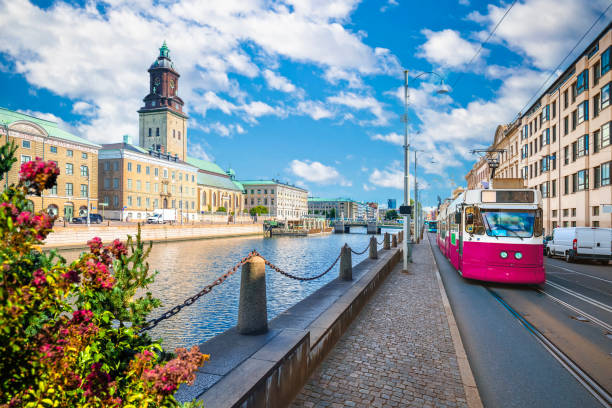
Sweden spent years demonstrating what a future without cash might look like. Now it is making sure cash does not disappear completely. That apparent contradiction captures where Swedish fintech finds itself at present.
Few countries embraced digital finance as enthusiastically. Consumers moved towards cards and mobile payments, banks reduced their dependence on physical branches and Stockholm produced fintech companies that became international household names. Swedish start-ups helped popularise buy-now-pay-later, account-to-account payments and open banking long before many of those concepts entered the financial mainstream.
Today, however, Sweden is confronting the consequences of that success. With payments almost entirely digital, cybersecurity, geopolitical instability and the possibility of network disruption have transformed resilience into a national priority. The question facing Sweden is no longer how to persuade people to use fintech.
It is how to ensure a highly digital financial system continues working when technology does not.
Sweden’s fintech success did not emerge in isolation. The country has a long history of producing internationally competitive companies, from Volvo and Ericsson to Spotify. High internet penetration, widespread digital identification and a population comfortable adopting new technologies subsequently created fertile conditions for financial innovation.
Stockholm became the centre of that ecosystem. Financial services remain an important part of Sweden’s economy alongside manufacturing, telecommunications, pharmaceuticals, technology, mining and increasingly green industries.
Swedish’s economy is expected to continue recovering this year after several difficult years characterised by inflation, higher interest rates and weakness in the property market, according to the International Monetary Fund (IMF).
Source link