Every market has its semi-permanent operating assumptions. For B2B payments, complexity is what has been treated almost as a permanent feature of the market. There are just, quite simply, too many rails, too many exceptions, too many invoices, and overall, too much manual work.
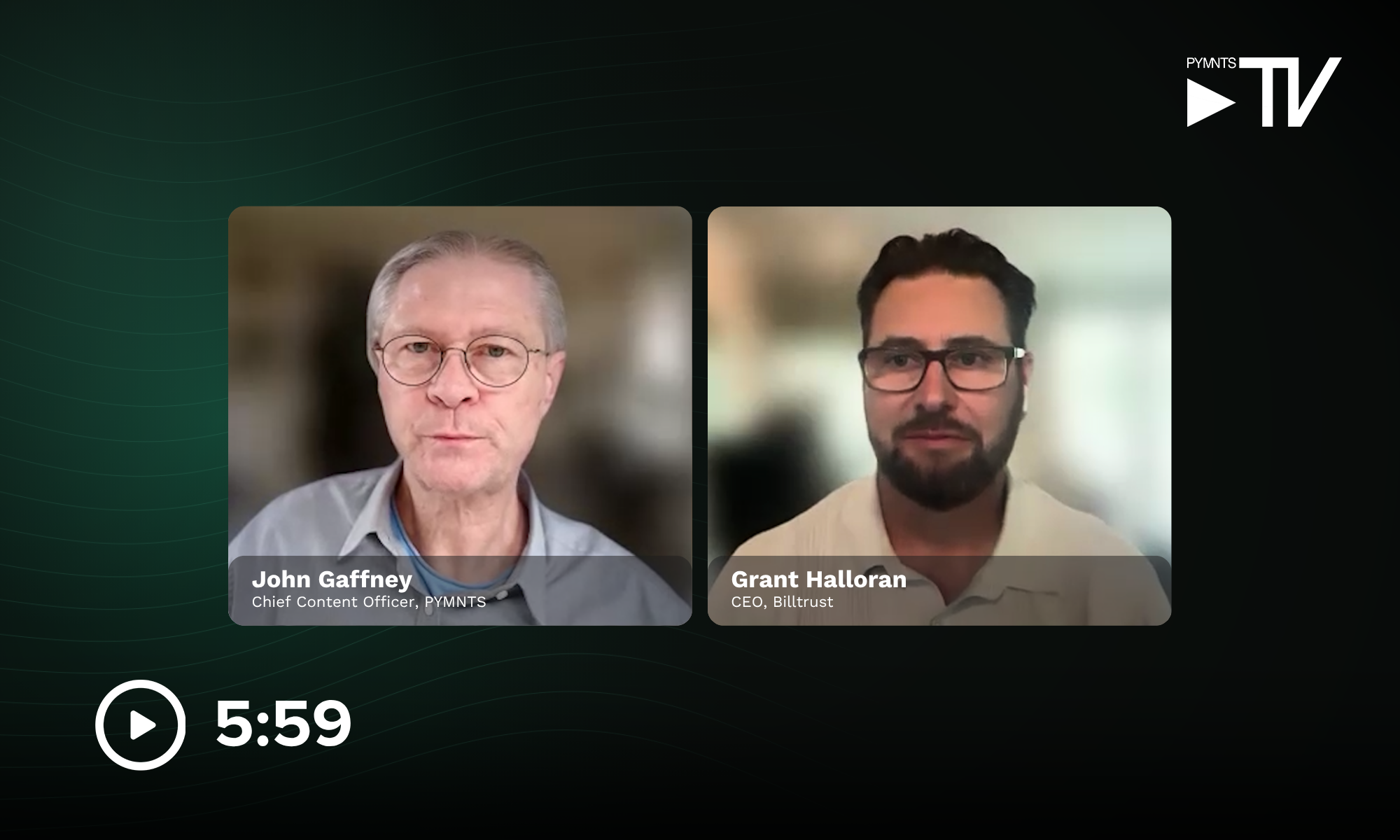
“It’s physically messy,” said Billtrust CEO Grant Halloran in conversation with PYMNTS for the August 2026 edition of the What’s Next in Payments series, “Only the Paranoid Thrive?”
Buyers pay through different channels, suppliers operate across fragmented systems, checks persist alongside cards and digital rails, and the process of turning an invoice into usable cash remains stubbornly labor-intensive. That’s just the corporate payments’ modus operandi.
“Nearly 60% of invoices are overdue today,” Halloran said, estimating that at any moment there is between $1.5 trillion and $2 trillion of what he calls “trapped cash” sitting in the B2B economy.
With borrowing costs remaining elevated and days sales outstanding rising, that trapped cash is becoming harder to ignore. The conventional response has been to automate pieces of the order-to-cash process.
Halloran pointed to the new capabilities firms today have for deciding, continuously, how each dollar of receivables should be converted into cash without damaging the customer relationship that created it.
“Businesses are trying to generate the most cash possible from their receivables at the fastest rate and at the best economics,” he said. “Historically, the magnitude of what we’re trying to solve would take a long, long, long, long time, and that’s why it hasn’t been solved before.
Source link