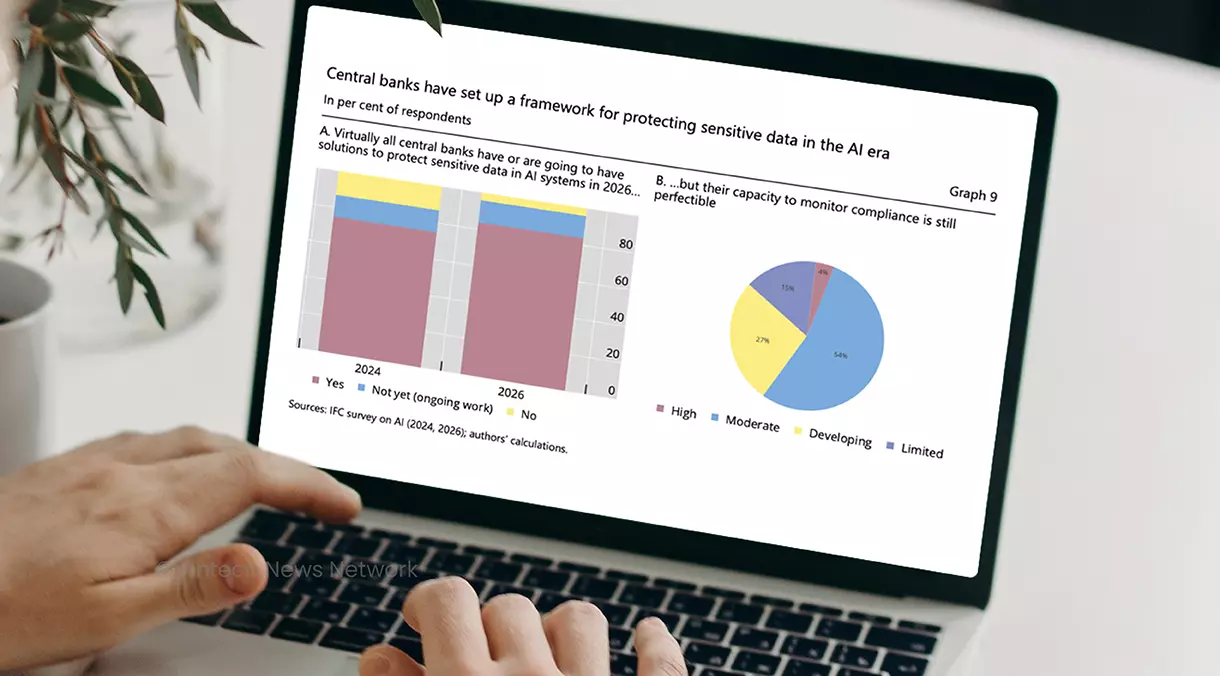
Around the world, central banks are expanding their focus on artificial intelligence (AI) from experimentation to readiness.
According to a new study by the Irving Fisher Committee on Central Bank Statistics (IFC), a forum for central bank economists, statisticians, and data professionals under the Bank for International Settlements (BIS), these institutions increasingly view themselves as AI-ready, supported by higher priority in their agendas, plans for organizational and data readiness, and wider AI applications.
The research, based on a 2026 survey of 65 IFC jurisdictions, found that more central banks have added AI to their strategic plans since 2024. In 2026, nearly two-thirds placed AI in their goals, up from less than half in 2024. This change is reflected in formal discussions of AI and machine learning (ML) within half of the organizations.
The report also highlights a clear rise in the share of production-grade initiatives deployed over the past years. Specifically, more than two-thirds of AI projects were in production in 2026, compared with about half two years earlier. The fraction of use cases under development has remained relatively unchanged at less than one third of the total, while the number of respondents not using AI or ML has failed to almost zero, further reflecting the widespread AI adoption.
In line with the growing relevance of AI, central banks also reported quickly advancing their readiness to use the technology by strengthening their organizational preparation. Specifically, over two-thirds of the respondents had either already established or were drafting such organizational strategies in 2026, with less than 10% not planning to do so.
Source link