Say you run a small business and an order comes in from overseas. You’re happy to take it, but your supplier’s bill is due before the customer’s payment lands.
An exchange-rate move while you wait could leave you with less than you budgeted. You might be doing those sums while packing the next order.
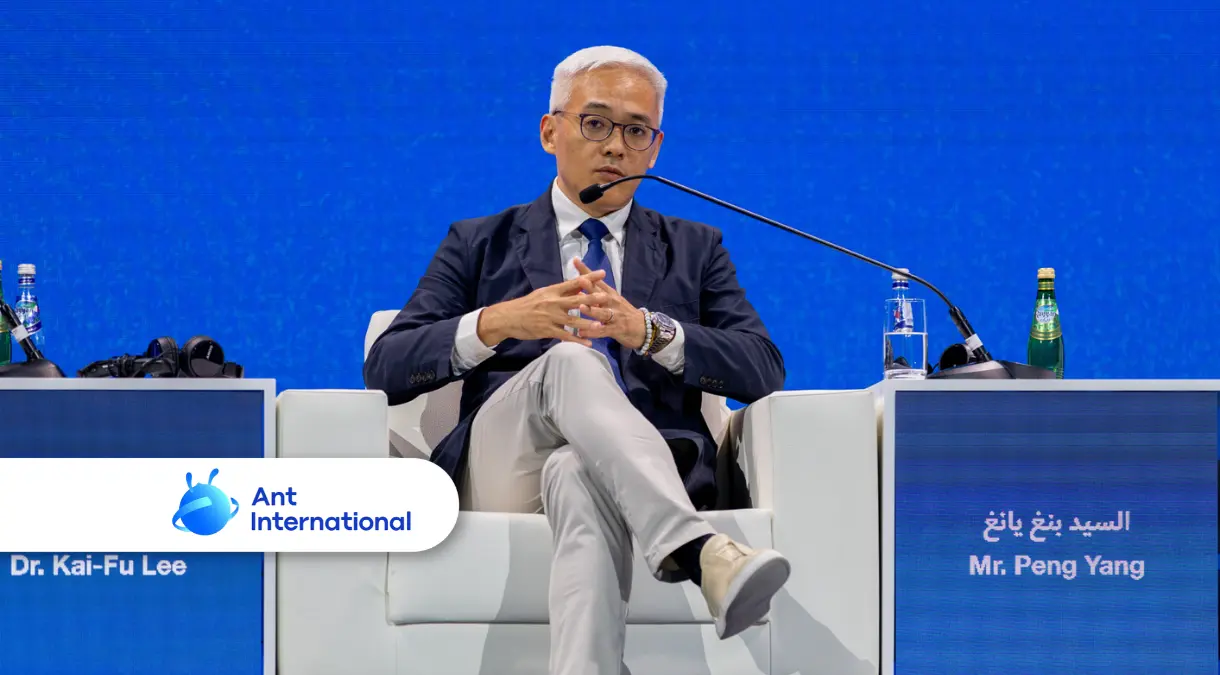
Ant International CEO Peng Yang thinks wider access to AI for SMEs could take some of that work off the owner’s desk and give more small businesses a shot at selling abroad.
He called for a new round of “re-globalisation” on a panel titled “Investing in AI for an Inclusive Digital Future” at UN Trade and Development’s World Investment Forum in Doha.
“Globalisation 1.0 mostly benefited large enterprises, and a lot of SMEs very rarely got to participate in the global economy,” Yang said on the panel.
Just 8% of small firms export directly, according to the WTO’s 2024 World Trade Report.
The share rises to 15% for medium-sized firms and 30% for large ones. The gap shows up in AI use, too.
Among countries with available data, 17.4% of small firms used AI in 2025, compared with 52% of large firms, according to the OECD.
“However, if we give smaller firms enough innovative technology support, and provide them the AI-powered solutions they need, they can also compete, grow and thrive on the global stage,” Yang added.
He even pointed to what Ant International was seeing in its own businesses.
He said its SME cross-border transaction volume had grown about 50% a year over the previous three years, roughly 10 times the growth rate of global trade volume.
Source link