A smaller savings balance can send the same warning to a bank while concealing very different problems for the customer. For some consumers, everyday bills are absorbing more money. For others, the income that supported their budget has fallen.
Complete the form to unlock this article and enjoy unlimited free access to all PYMNTS content — no additional logins required.
The May 2026 Generational Pulse Report from PYMNTS Intelligence, “Inside the Cutback Economy: How Age, Behavior and Financial Pressure Shape Consumer Spending,” examines those pressures through a survey of 2,283 U.S. adults. Its findings suggest that a customer’s age can help explain financial strain, but providers also need to understand how that customer is responding. For a bank reviewing a household budget, the useful question is what caused the squeeze and which expense or income change could relieve it.
Please add us to your preferred sources list so our news, data and interviews show up in your feed. Thanks!
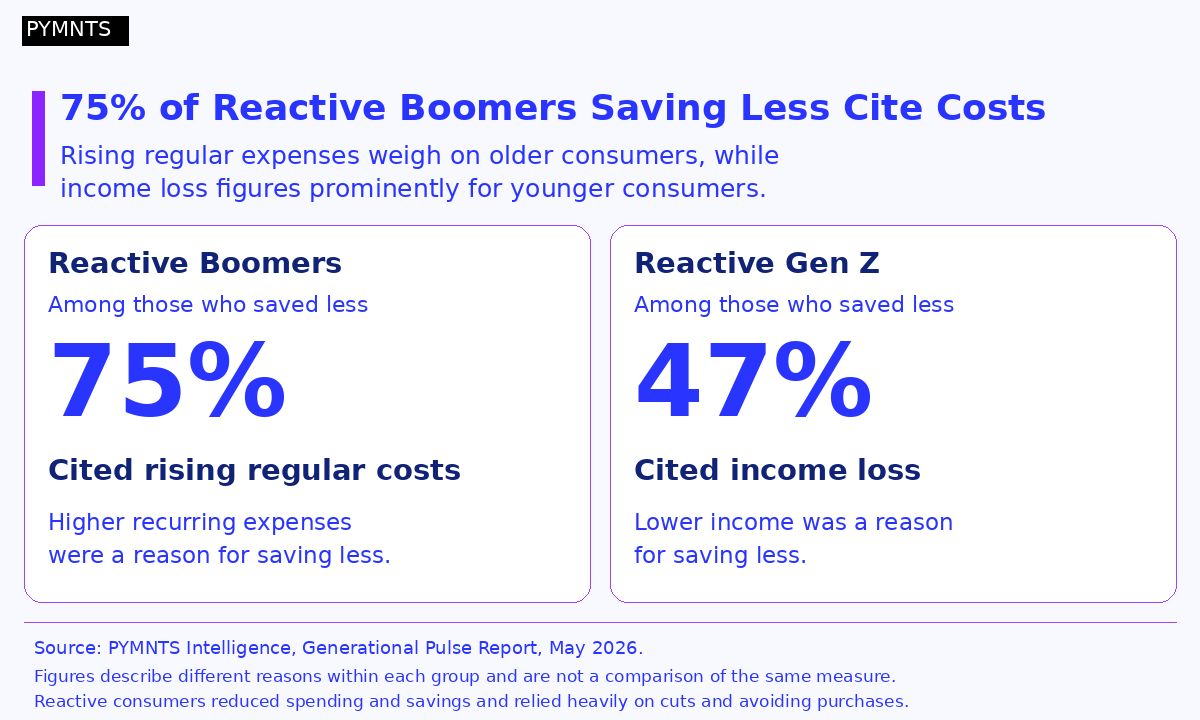
Savings declines have different causes. Among reactive boomers who saved less, 75% cited rising regular costs. Among reactive Gen Z consumers who saved less, 47% cited income loss. The report defines reactive consumers as those whose spending and savings fell and who relied heavily on spending cuts and avoiding purchases. For providers, the two findings point toward different conversations. Reviewing recurring bills may help identify manageable expenses, while an income decline calls for examining how the customer will cover obligations until earnings recover.
Source link