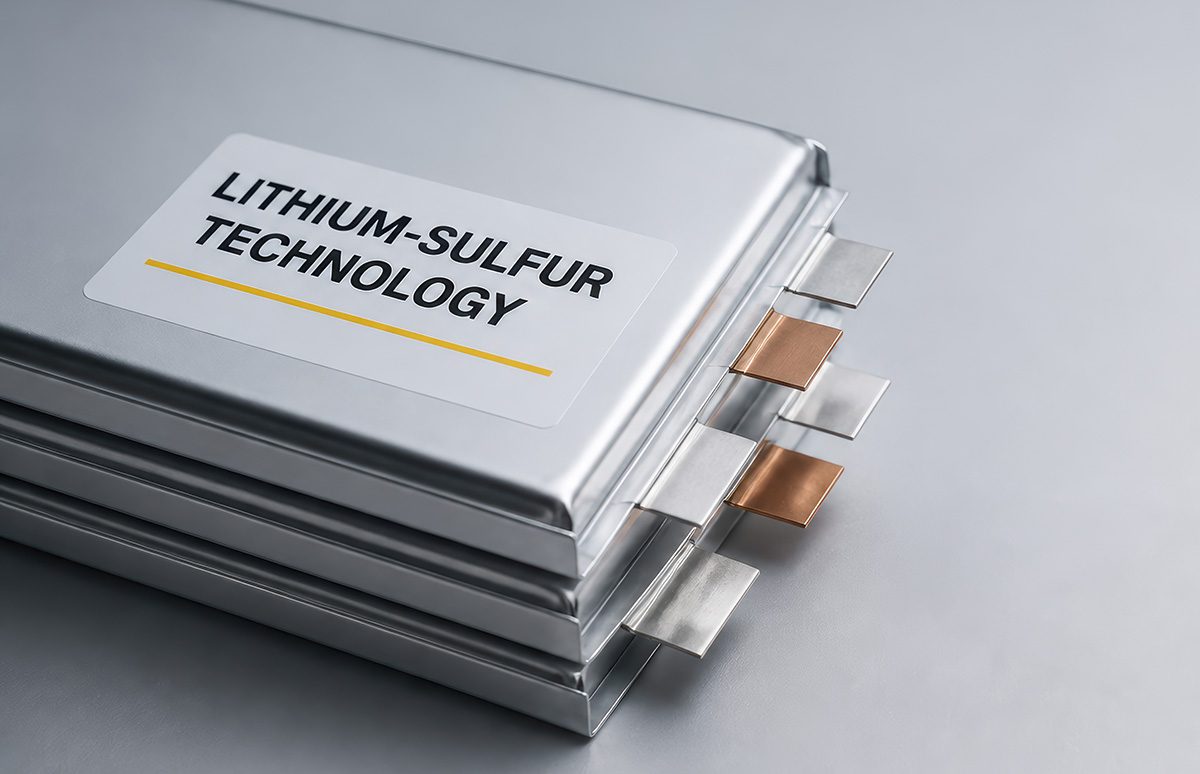
Lithium-sulfur cathode developer Xponential Battery Materials (XBM) and silicon-carbon anode developer SiCAM Technologies have formed a technology collaboration to develop a silicon-sulfur battery materials platform for US battery OEMs.
The platform will pair SiCAM’s silicon-carbon (Si-C) anode material with XBM’s lithium-sulfur (Li-S) cathode materials and cell technologies.
The companies say silicon-sulfur batteries have substantially higher theoretical energy density than conventional lithium-ion batteries. Silicon is the second most abundant element in the Earth’s crust, and sulfur is a byproduct of US petroleum refining.
Most other Si-C anode developers use silane in a chemical vapor deposition (CVD) process, while SiCAM uses trichlorosilane in a fluidized-bed CVD process. SiCAM’s fluidized-bed process is designed to create a bonded silicon-composite primary structure that helps reduce silicon’s 300% swelling during charge and discharge cycles. SiCAM is the exclusive licensee of the patented SiCAM anode material and is working to commercialize the material and establish production operations in the US.
XBM’s CarbonX cathode material is derived from lignin, a byproduct of US paper pulping. It uses porous carbon made with a proprietary sol-gel process and infused with sulfur and catalysts. The cathode is designed to improve sulfur utilization, cycle life and cell-level energy density.
“This silicon-sulfur cell technology collaboration is the natural evolution of our company’s US centric ‘Sustainable Battery’ vision avoiding longstanding battery chemistries that are mined, more expensive, and foreign sourced and controlled,” said Phillip Roberts, co-founder of SiCAM Technologies and XBM.
“Our near-term objective is to optimize our high-capacity Li-S cathode and SiCAM’s Si-C anode in a first-of-its-kind silicon-sulfur battery platform, initially targeting high-energy-density, lightweight eMobility battery applications such as eVTOLs and drones,” said Jon Shan, XBM’s Chief Technology Officer.
Source link